The WR Litmus Test: Separating Dynasty WR Breakouts From Fool’s Gold | Part 1
Which receivers should you be targeting in dynasty

LAB REPORTS

Every offseason, the dynasty community finds itself divided on a handful of wide receivers. Some players are viewed as the next breakout stars, while others are labeled as players riding unsustainable production or hype.
The goal of this series is simple: separate legitimate dynasty breakouts from fool’s gold. Using advanced metrics, I’ll evaluate each receiver’s opportunity, efficiency, and situation before giving a final dynasty verdict.
These players were selected because they either exploded onto the scene, flashed a high-end ceiling, or are entering a situation where increased opportunity could drastically change their dynasty value.
The question we’re trying to answer: Are these players the next breakout stars, or are dynasty managers buying into a mirage?
Metrics

For each receiver, I will evaluate three key areas:
Opportunity: Are they earning enough volume to support fantasy production?
Efficiency: Are they maximizing their opportunities and showing signs of elite talent?
Situation: Does their team environment create a realistic path to future production?
Within these categories, I will analyze the following metrics:
- First Read Target Share
- Route Participation
- Air Yards
- Air Yards per game
- Target Separation
- Explosive Plays
- Yards Per Target
- Fantasy Points per Route Run
- PFF Grade
To provide additional context, I will also grade several key metrics using the following thresholds:
Target Share
- Elite=27+%
- WR1= 22-26%
- Secondary Option= 18-21%
- Average= 14-17%
- Below Average= under 13%
Targets Per Route Run (TPRR)
- Elite= 0.25+
- Average= 0.20-0.24
- Below Average= under 0.19
Yards Per Route Run (YPRR)
- Elite=2.0+
- High End Starter=1.5-1.99
- Average= 1.10- 1.49
- Below Average: under 1.09
Parker Washington

- KTC Rank: WR34
- Age: 24
- Draft Capital: Round 6, 185 Overall
- Team Vacated Targets at WR: 61
There seems to be massive growing hype in the community for Parker Washington. Not Luther Burden level, but his dynasty value has risen drastically in the past year. The real question here is was the end of last season a fluke or is there something real here to be excited about?
Opportunity
- Target Share: 18.41% (Secondary Option)
- TPRR: 0.23 (Average)
- Air Yards: 1192 (27th)
- Air Yards per game: 74.5
- First Read Target Share: 22.2% (46th)
- Route Participation: 67.2%
The biggest question mark in Parker Washington’s profile is not talent, but opportunity. His usage metrics do not yet reflect a receiver who has established himself as a true focal point of an NFL passing attack.
Washington’s 18.41% target share profiles more as a secondary option, while his 22.2% first-read target share suggests he was not consistently the player the offense was looking to feature. His 0.23 TPRR was solid, but it falls short of the elite threshold we typically see from future fantasy difference-makers.
The biggest concern is his route participation. At 67.2%, Washington was not consistently on the field as a full-time player, which makes it difficult to project a true breakout without a significant increase in playing time.
However, context matters. Washington did not truly establish himself until the end of the season, meaning these numbers may undersell his potential role moving forward. If he can earn a larger snap share while maintaining his efficiency, the opportunity profile could look very different next season.
Efficiency
- YPRR: 2.20 (Elite)
- YPT: 8.9 (22nd)
- Fantasy Points Per Route Run: 0.48 (15th)
- Target Separation: 1.23 (77th)
- Explosive Plays:18 (8th)
- PFF Grade: 79.3 (18th)
While Parker Washington’s opportunity metrics leave some questions, his efficiency profile is where the breakout case becomes interesting.
The biggest green flag in Washington’s profile is his 2.20 YPRR. Historically, receivers who consistently produce elite yards per route run numbers tend to possess the underlying talent necessary to become high-end fantasy assets when their opportunities increase.
Washington was also highly efficient in other areas, finishing with a strong yards per target mark, ranking inside the top 15 in fantasy points per route run, and creating explosive plays at one of the highest rates among wide receivers. These metrics suggest that when Washington was on the field, he was making the most of his opportunities.
The biggest concern in his efficiency profile is target separation, where Washington ranked 77th. However, if he continues to be deployed primarily from the slot and in the F role of Liam Coen’s offense, this metric may not be as concerning. That role traditionally creates opportunities through option routes, crossers, and schemed touches rather than relying solely on traditional separation.
Ultimately, the efficiency profile shows why dynasty managers are excited about Washington. The question is not whether he can produce when given opportunities — the data suggests he can. The question is whether he can earn enough consistent volume to turn that efficiency into weekly fantasy production.
Situation
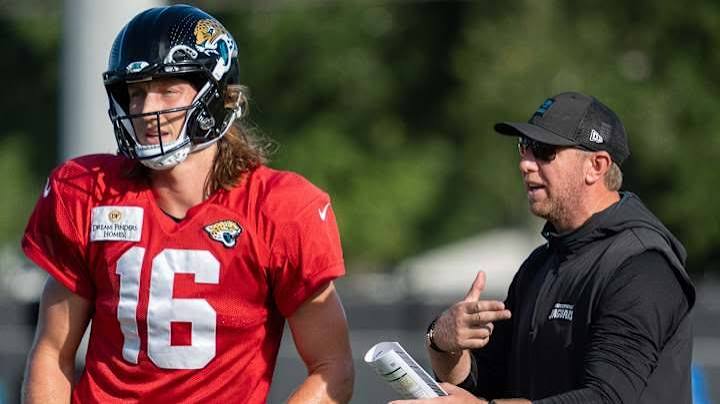
The biggest concern surrounding Parker Washington is not talent or efficiency — it is whether the Jaguars’ offense provides enough opportunity for him to become a consistent fantasy asset.
The biggest variable is the crowded wide receiver room. Brian Thomas Jr. appears locked into a starting outside receiver role, while Travis Hunter, Jakobi Meyers, and Washington are competing for opportunities behind him. The biggest question is whether Washington can maintain consistent snaps in two-receiver sets if Travis Hunter receives a significant offensive workload.
If Washington is pushed into more of a rotational or slot role, his efficiency may not matter enough to translate into weekly fantasy production. However, if he earns a consistent role in the offense, his upside becomes much more interesting.
After a disappointing first two seasons, Washington broke out late last year, finishing with:
- 58 receptions
- 847 yards
- 5 touchdowns
- WR33 finish
However, the excitement is not coming from the overall season numbers. It is coming from what Washington showed when his role expanded late in the year.
Weeks 16-18:
- 6.3 receptions per game
- 115.7 receiving yards per game
- 0.67 touchdowns per game
That pace over a full 17-game season would have resulted in:
- 107 receptions
- 1,966 yards
- 11 touchdowns
Obviously, that production is not sustainable over a full season, but it showed dynasty managers the ceiling Washington could potentially reach with increased opportunity.
The biggest reason dynasty managers are buying into Washington is his projected fit in Liam Coen’s offense, specifically the coveted “F” role.
During his time with the Rams, Coen was heavily involved in an offense built around the “F/Y/Z” receiver alignments. The F role traditionally acts as a centerpiece of the passing game, utilizing option routes, crossers, and designed opportunities to get playmakers the ball in space.
We have seen receivers thrive in this role:
- 2018 Robert Woods: 1,219 yards, 6 TDs, 16.6 FPPG
- 2019 Cooper Kupp: 1,161 yards, 10 TDs, 16.9 FPPG
- 2020 Cooper Kupp: 974 yards, 3 TDs, 13.9 FPPG (12 games)
- 2022 Cooper Kupp: 812 yards, 6 TDs, 22.4 FPPG (9 games)
- 2024 Chris Godwin: 576 yards, 5 TDs, 19.7 FPPG (7 games)
While injuries impacted some of these seasons, the fantasy production shows the ceiling that this role can provide when paired with the right player.
Another factor that could impact Washington’s future is his contract situation. Entering the final year of his rookie deal, this season represents an opportunity for Washington to prove he deserves a long-term role and a significant second contract.
The downside is that Washington was only a sixth-round pick, meaning the Jaguars do not have a major draft investment tied to him. If Thomas Jr. and Hunter establish themselves as elite players, the team could decide to move on.
However, this is where the F-role argument becomes important. Cooper Kupp was a third-round pick, and Robert Woods was viewed as a solid but unspectacular receiver before becoming a major piece of this offense. The role has historically elevated receivers who fit the skill set, regardless of draft capital.
What Needs to Happen? Range of Outcomes
The path to a Parker Washington breakout is fairly simple: he needs to earn a consistent role in the Jaguars’ offense while maintaining the elite efficiency he showed last season.
The biggest question is not whether Washington can produce when given opportunities — the data suggests he can. The question is whether he can earn enough consistent snaps and targets to turn that efficiency into reliable fantasy production.
If the Jaguars continue rotating between four or more pass-catchers throughout the season, Washington’s ceiling could be limited regardless of how efficiently he plays. For the breakout case to hit, he needs to separate himself from the rest of the group and become a consistent part of the weekly offensive game plan.
Best Case Scenario:
Washington becomes the clear F-role receiver in Liam Coen’s offense and develops into a weekly WR2 with legitimate WR1 upside.
Worst Case Scenario:
The Jaguars continue spreading targets between multiple receivers, leaving Washington in a rotational role that limits his weekly fantasy ceiling.
Most Likely Scenario:
Travis Hunter earns a meaningful offensive role, creating a rotation between him and Washington for the second receiver spot behind Brian Thomas Jr. Washington remains an efficient and productive player when on the field, but the target competition limits his weekly consistency and overall fantasy ceiling.
In this outcome, Washington can still provide valuable fantasy weeks, but the path to becoming a locked-in WR2 is more difficult if the Jaguars continue spreading opportunities across multiple playmakers.
The WR Litmus Test Results
Opportunity: 🟡 INCOMPLETE CONTEXT
The talent is there, but the volume has not caught up yet. Washington showed he can produce when given opportunities, but his target share, first-read share, and route participation still leave questions about his ability to become a consistent fantasy option.
Efficiency: 🟢 PASS
Washington checks nearly every box as a player who can maximize opportunities. His elite YPRR, explosive play ability, and strong fantasy points per route run suggest there is legitimate talent behind the breakout case.
Situation: 🟡 UNCERTAINTY
The fit in Liam Coen’s offense is exciting, but the Jaguars’ crowded wide receiver room creates uncertainty around Washington’s weekly role and long-term ceiling.
Dynasty Verdict
Parker Washington is one of the more difficult dynasty players to evaluate because his profile has conflicting signals. The efficiency metrics strongly suggest there is legitimate talent here, but the biggest obstacle is whether the Jaguars can provide him with enough consistent opportunity in a crowded wide receiver room.
I have a hard time believing the Jaguars move away from giving Travis Hunter a significant offensive role after trading up to select him, and Brian Thomas Jr. appears locked into the top outside receiver role long term. That leaves Washington competing for opportunities in an offense with multiple talented pass-catchers.
However, the upside case is still very real. Washington’s efficiency metrics are impressive, and the history of Liam Coen’s F-role gives him a legitimate path to fantasy relevance if he earns consistent snaps.
Dynasty Verdict: HOLD
If Parker Washington is already on your roster, I have no interest in selling at his current value. The combination of his efficiency, age, and potential role creates too much upside to move on from cheaply.
At the same time, I am not aggressively buying at his current price because the target competition creates legitimate concerns about his weekly consistency and long-term ceiling.
Washington is exactly the type of player this series was created for: a player where the breakout case is real, but the risk is impossible to ignore.
Explore The Lab.


Recent Lab Articles.
Read more
Bullpen Notes
9/12

Starts, Sits, and Splits: Week 1
Welcome to The Delta Duo’s FIRST EVER Starts, Sits, and Splits for Week 1. Each week we'll identify two Starts at each position, two Sits at each position, and a Split: one player where the two halves of the Duo are split in our decision. We’ll
Weekly Edge Report
FTO’S FBB Weekly Edge Report: September 14 – September 20
Bullpen Stock Watch
9/12