The Dark Side Blueprint: Mike Macdonald and the Fallout Across the NFC West
Defense
LAB REPORTS
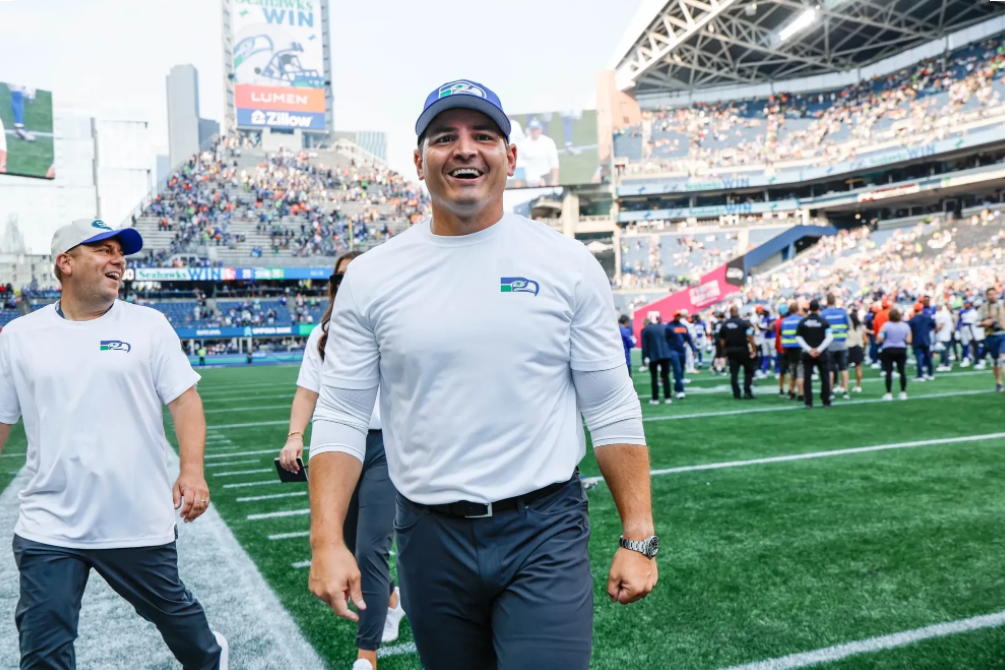
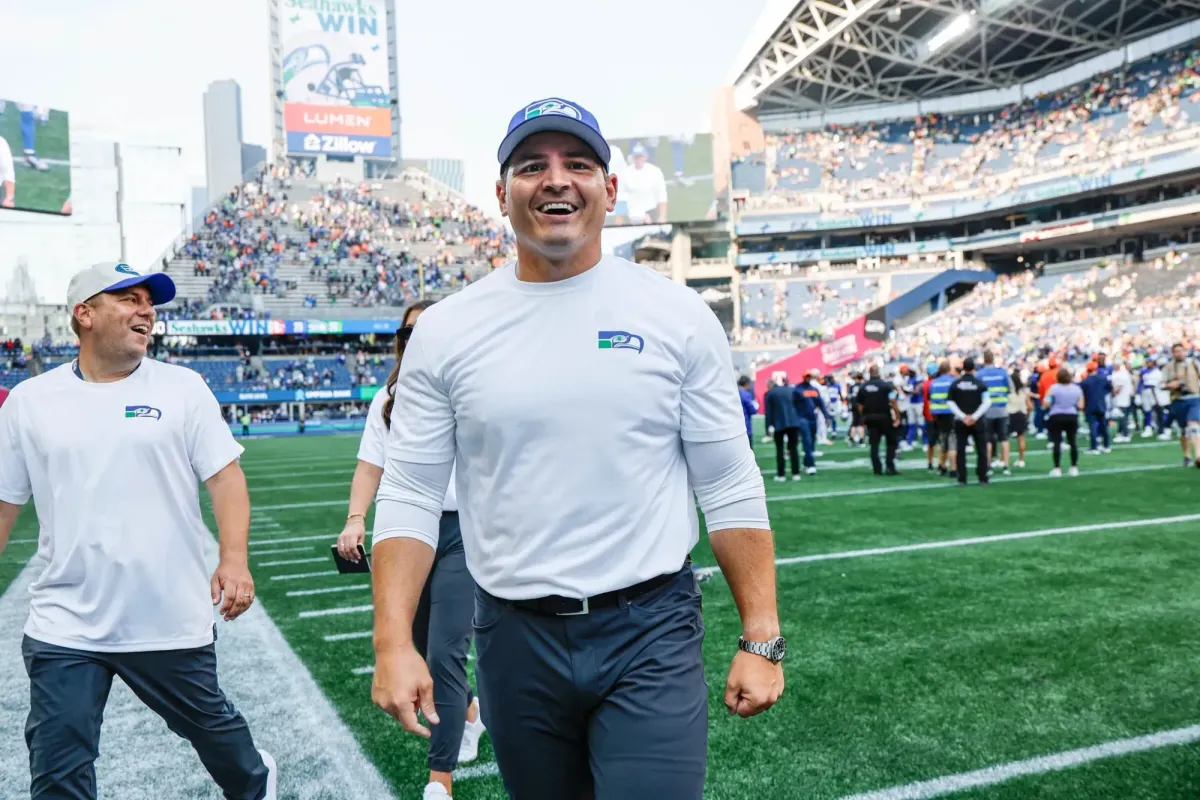
For over a decade, NFL offenses have held the upper hand, utilizing the "McVay/Shanahan" wide-zone run game and illusion-of-concept play-action to put defenders in constant conflict. But a defensive blueprint has emerged to systematically dismantle these modern offenses—pioneered by Mike Macdonald.
Macdonald does not build defenses around rigid, "this-is-what-we-do" philosophies (like the famous Seahawks Legion of Boom Cover 3 of the 2010s). Instead, his units are defined by multiplicity, modularity, and illusion. He forces quarterbacks to play a mental guessing game on every single snap.
Through four seasons of primary defensive play-calling (2022–2025, across Baltimore and Seattle), Macdonald has fielded two of the most statistically dominant defenses of the analytics era — the 2023 Ravens and 2025 Seahawks — plus a 2024 Seattle debut that also finished among the league's most efficient units. His crowning achievement is the 2025 Seattle Seahawks, who won Super Bowl LX behind the NFL's #1 overall defense in EPA/play allowed (roughly -0.11) and the league's most stifling run defense (-0.196 EPA allowed per rush, also #1). It's worth noting: Aden Durde holds the title of Seahawks defensive coordinator, but Macdonald — as head coach — is the team's primary defensive play caller, making him the first HC to win a Super Bowl calling his own defense.
1. The Core Philosophy: "Illusion of Complexity"
To understand Macdonald's genius is to understand how he makes a relatively simple set of rules look like an unsolvable maze to an opposing quarterback.
Modular Defense (Same Paths, Different Faces): Macdonald utilizes a modular system. Instead of teaching 50 different blitzes, he teaches a handful of pressure paths. Any player—whether a nickel cornerback, a safety, or an inside linebacker—can execute that path. The offense sees a completely different look, but the defense is running the exact same rule set.
The Power of Presentation: Macdonald generates pressure without sacrificing coverage defenders. Rather than relying on heavy "house blitzes" (which leave the secondary vulnerable), he excels at presenting threat. By crowding the line of scrimmage, he forces the offensive line to commit its protection rules. At the snap, unexpected defenders drop into coverage while others rush, breaking the protection scheme with only a four-man rush. Notably, Seattle's 2025 defense pulled this off blitzing at one of the NFL's lowest rates while still generating one of the league's better pressure rates — pressure by design, not by numbers.
Post-Snap Rotation: The primary key to Macdonald's pass defense is preventing quarterbacks from reading coverage pre-snap. His safeties and corners will show a standard "two-high" safety look before shifting into a completely different coverage shell right at the snap. The quarterback is forced to post-snap process, which delays his trigger by crucial fractions of a second.
2. The "Amorphous" Front & Player Versatility
A Macdonald defense doesn't have rigid positions—it has chess pieces.
The "Unicorn" Role: Macdonald excels at utilizing highly versatile defenders. In Baltimore, it was safety Kyle Hamilton, who lined up at slot corner, deep safety, and edge rusher in the same game. In Seattle, rookie safety Nick Emmanwori emerged as that same kind of Swiss Army knife in 2025, fluidly moving from the slot to the box to deep coverage. Devon Witherspoon, meanwhile, played more of a true perimeter cornerback role in 2025 as Emmanwori took on more of the moving-chess-piece responsibility — Witherspoon still missed time with a knee injury but delivered when it mattered most, breaking up two red-zone throws in the NFC Championship win over the Rams.
No Base Defense: Offenses love to "personnel check" defenses, using heavy groupings to force a defense into a slower base package. Macdonald refuses to play along. Seattle ran a nickel (five defensive backs) package at one of the highest rates in the league in 2025, using its hybrid defenders to defend the run in space rather than getting bigger up front.
3. The 2025 Seahawks Masterclass
The 2025 Seahawks season proved that this system can completely choke out modern offensive game plans.
2025 SEAHAWKS DEFENSIVE FOOTPRINT (final season):
- Points Allowed: 17.2/game (1st) — 292 total, fewest in the league
- EPA/Play Allowed: approx. -0.11 (1st)
- Rush EPA Allowed: -0.196 (1st) — the best run defense in the league
- Point Differential: +191 (1st, franchise record)
The Great Wall: The most staggering jump in 2025 was the rush defense, which rose to #1 overall. Free-agent addition DeMarcus "Tank" Lawrence — whom Macdonald called "the best drill player I've ever seen in my life" — joined Leonard Williams and Byron Murphy II to give Seattle a front that could win with just four rushers, achieving the league's best run-defense marks while playing "light" boxes (six or fewer defenders in the box) more often than almost any other defense in football.
Taking Away the Deep Ball: Because Macdonald's zones are so well-communicated and his pre-snap disguises are so effective, quarterbacks around the league were consistently forced to check the ball down rather than risk deep throws against Seattle's coverage shells. The approach paid off on the league's biggest stage: in Super Bowl LX, Seattle held Drake Maye and the Patriots to the lowest PFF quarterback grade recorded in a Super Bowl in the last 20 years, despite New England actually out-gaining Seattle in total yards — a reminder that Macdonald's defense wins by controlling the game's decisive moments, not just the box score.
4. The Career Arc: Baltimore to Seattle
Macdonald's defensive progression reveals a coordinator who consistently maximizes his roster's specific strengths.
The Introduction (2022, Baltimore) Macdonald takes over a Ravens defense in transition, moving away from Wink Martindale's blitz-heavy system toward a zone-disguise structure. It's a rocky start — Baltimore ranks near the bottom of the league in EPA/play through the first month — but the unit finishes the season a respectable 8th in DVOA.
The Masterpiece (2023, Baltimore) The system clicks perfectly. The Ravens defense finishes top-three in EPA/play and becomes the first defense in NFL history to lead the league outright in points allowed, sacks, and takeaways in the same season.
The Transition (2024, Seattle) Taking over as head coach in Seattle, Macdonald inherits a roster built for a different scheme. A midseason trade for linebacker Ernest Jones IV becomes a turning point, and the defense finishes the year among the league's most efficient units by both EPA/play and DVOA.
The Pinnacle (2025, Seattle) With a roster now built in his image — highlighted by the Lawrence signing and Emmanwori's arrival as a rookie — Macdonald's "Dark Side" defense becomes the league's #1 unit by points and EPA, anchoring a run to Super Bowl LX.
5. Dynasty Impact: How Macdonald's Defense Shapes the NFC West's Weapons
Facing Macdonald's system twice a year is now a permanent reality for the rest of the NFC West, and the 2025 results back up why that matters. Seattle went a combined 4-2 in the regular season against its three division rivals, then throttled both San Francisco (41-6, the worst offensive output of Kyle Shanahan's coaching career) and Los Angeles (31-27 in the NFC Championship) when it counted most. Here's what that means for the division's top dynasty assets heading into 2026.
Arizona Cardinals
The Cardinals enter 2026 with by far the most change of any NFC West team. Jonathan Gannon was fired after a 3-14 season (swept by Seattle), and the Cardinals hired Rams offensive coordinator Mike LaFleur — part of the McVay coaching tree — as head coach, with Nathaniel Hackett running the offense day-to-day. Bigger still: Kyler Murray's run in Arizona appears over. Jacoby Brissett is the projected 2026 starter, with Gardner Minshew and rookie Carson Beck also in the QB room. Any dynasty evaluation of Arizona's skill talent has to be filtered through that quarterback uncertainty first.
Marvin Harrison Jr. Entering Year 3 after an underwhelming, injury-affected 2025, Harrison is getting a fresh scheme built around him — LaFleur has said publicly that Harrison will play the "Davante Adams role" in Arizona's offense (with Michael Wilson filling more of a Puka Nacua–style function). That's a real opportunity, but it comes against a defense that specializes in taking away exactly the kind of contested, low-window vertical shots Harrison has leaned on. Against Macdonald-style post-snap disguise, Harrison's margin for error narrows unless the quarterback situation stabilizes and the route tree diversifies.
Trey McBride. McBride enters 2026 as a First-Team All-Pro and the one truly proven weapon on Arizona's roster, regardless of who's playing quarterback. That's relevant against Macdonald: defenses built to prevent explosive plays generally concede underneath and intermediate volume, and that's McBride's exact game. He's arguably the safest of the three Cardinals in this matchup precisely because his value doesn't depend on beating disguise deep down the field.
Jeremiyah Love. The No. 3 overall pick and the centerpiece of Arizona's rebuild, Love steps into a crowded room with James Conner, Trey Benson, and free-agent signee Tyler Allgeier, running LaFleur's outside-zone scheme. That's a tough proving ground against Seattle, which finished the 2025 season as the NFL's best run defense by EPA allowed — but it's also a scheme built on zone and motion rather than the downhill power looks Macdonald's front is most battle-tested against, so there's a real path for a back with Love's vision to find grass even in a difficult matchup.
Los Angeles Rams
The Rams return largely intact after a run to the NFC Championship. Reigning NFL MVP Matthew Stafford (38, and not slowing down — he led the league in passing yards and touchdowns in 2025 behind the NFL's No. 1 scoring offense) is back for 2026, though he loses play-caller Mike LaFleur to Arizona; longtime Rams assistant Nate Scheelhaase steps up to offensive coordinator, which points to scheme continuity rather than an overhaul.
Puka Nacua put together a career year in 2025 (129 catches, 1,715 yards, 10 touchdowns) and remains the focal point of the passing game entering a contract year. Kyren Williams is now sharing the backfield more than in years past, in what's become a legitimate 1-2 punch with Blake Corum, which caps his per-game ceiling somewhat even as the offense stays productive as a whole.
The head-to-head history against Macdonald is the story here: the Rams split their two regular-season meetings with Seattle by a combined two points (a 21-19 win, a 38-37 loss) before falling 31-27 in the NFC Championship. That's a defense the Rams can move the ball against — L.A.'s offense was the NFL's best by scoring and total yards in 2025 — but one that has consistently found a way to make the difference in the biggest moments. For Stafford, Nacua, and Williams, that likely means solid floor production against Seattle twice a year, with touchdown equity being the harder thing to bank on.
San Francisco 49ers
San Francisco enters 2026 with its passing infrastructure locked in — Brock Purdy signed a five-year, $265 million extension — but real injury questions surrounding its two biggest offensive weapons.
George Kittle, still productive at 32, tore his Achilles late in the 2025 season and is expected to miss all of training camp; whether he's ready for Week 1 is genuinely uncertain. The gap he leaves is significant — San Francisco's rushing efficiency dropped noticeably with him off the field in 2025, and he still led all tight ends in receiving yards over expected despite missing six games.
Christian McCaffrey, approaching his 30th birthday, was the engine that kept the 49ers' season together in 2025 while Purdy, Kittle, and the defense all dealt with injuries — an outsized workload the team is trying to lighten by adding Mike Evans and Christian Kirk at receiver this offseason. Against Macdonald's defense specifically, that added receiving help matters: Seattle's scheme is built to take away explosive plays and force checkdowns, which is exactly the kind of usage that has kept McCaffrey heavily involved as both a runner and receiver in the past.
San Francisco split its 2025 regular-season series with Seattle (a Week 1 road win, a Week 18 home loss) before the two teams met again in the divisional round — a 41-6 Seahawks blowout that was San Francisco's most lopsided playoff loss in years and Shanahan's least productive offensive output as a head coach. With Kittle's availability uncertain and McCaffrey approaching the age where workload management becomes a real question, Purdy's supporting cast — and by extension his own fantasy ceiling — carries more variance against this defense than the raw talent on the roster would suggest.
Conclusion: The Blueprint of the Future
The NFL is a copycat league. Just as Pete Carroll's Cover 3 and Vic Fangio's light boxes defined previous eras of defensive football, Mike Macdonald's modular, shape-shifting system has become the defensive meta of the late 2020s.
Success under Macdonald isn't about finding the fastest or the strongest players—it's about finding the smartest, most versatile players who can operate within a fluid, ever-evolving system.
To watch a detailed breakdown of how Mike Macdonald aligns his hybrid defenders to stifle these modern schemes, watch this video: How This Defense Is Outsmarting The Entire NFL. This analysis goes deep into the game tape, showcasing how Seattle utilizes unique alignments to keep offenses completely off balance.
Explore The Lab.


Recent Lab Articles.
Read more
The WR Litmus Test: Separating Dynasty WR Breakouts From Fool’s Gold
Which receivers should you be targeting in dynasty
Tersh Wins: Home Runs & RBI
The Familiar, the Unfamiliar, and the Data to Prove it
Seahawks Rookie Preview: How I'm Approaching Seattle's Newest Weapons in My Dynasty Leagues
Seattle rookies in depth breakdown
Jaylen Waddle
LAB REPORTS LFX OVERALL By: The Lab --/--/-- Jaylen Waddle Poised for a Breakout Campaign in 2026 During the offseason, the Denver Broncos acquired Jaylen Waddle and a 2026 fourth-round pick from the Miami Dolphins in exchange for Denver’s first-round pick (30th overall), a third-round pick, and