You Invested in Cam Ward Last Year… Now What? Evaluating His Dynasty Outlook
Cam Ward is on the way up
LAB REPORTS
In superflex leagues, the quarterback position can be one of the hardest positions to acquire. This often leaves dynasty managers stuck in a state of roster limbo — they have elite talent at every other position, but lack the consistent weekly production and upside that a difference-making QB provides.
When you find yourself in this situation, a mid-round rookie draft pick can feel like a lifeline. The need at quarterback becomes so significant that managers often feel forced to draft for positional scarcity rather than simply taking the best player available.
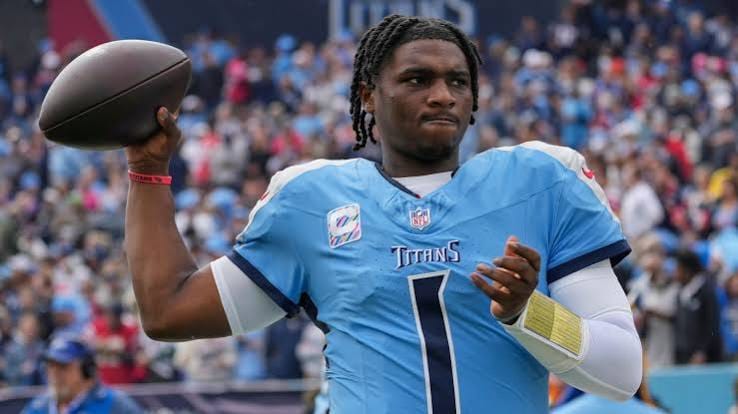
If that was you last year, there’s a good chance you ended up selecting Cam Ward.
Ward’s rookie season was underwhelming compared to the expectations placed on him, but the Titans have made significant changes around him this offseason. With a revamped supporting cast and a new opportunity ahead, dynasty managers are now left with the biggest question:
You invested in Cam Ward last year… now what?
2025 Season Analysis
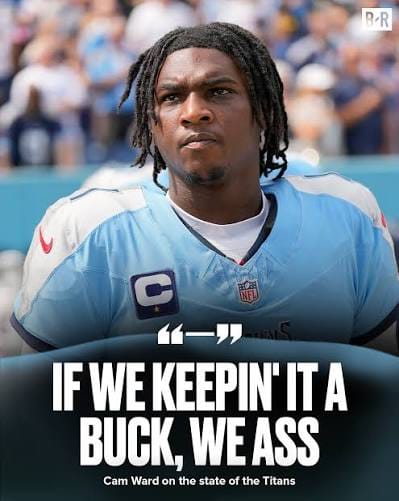
The 2025 season was a challenging one for Cam Ward. He finished the year with 3,169 passing yards, 15 touchdowns, and 7 interceptions. On the surface, those numbers are not disastrous, but they also fall short of the type of production dynasty managers were hoping for from a highly drafted rookie quarterback.
To get a better understanding of his rookie season, we need to look beyond the box score and dive into the advanced metrics.
Despite ranking eighth in the NFL in passing attempts, Cam was below average in nearly every major passing category.
Decision Making
- 26 Danger Plays (5th)
- 15 Interceptable Passes (10th)
Accuracy
- 66.1% True Completion Percentage (31st)
- 61.7% Clean Pocket Completion Percentage (33rd)
- 66.1% Catchable Pass Rate (48th)
Efficiency
- 5.9 Yards Per Attempt (37th)
- 83.4 True Passer Rating (33rd)
- 33.1 QBR (27th)
- 51.3% First Read Throw Rate (29th)
The biggest concerns from Cam’s rookie season were his accuracy and decision-making. He consistently put the ball in dangerous situations, ranking top 10 in the NFL in both danger plays and interceptable passes.
Some of these struggles can be attributed to the normal adjustment period that comes with transitioning to the NFL. Rookie quarterbacks are often forced to process defenses faster, make tighter-window throws, and adjust to the speed of the game. However, the concerning part is that Cam’s issues extended beyond just turnovers.
He ranked 27th or worse in nearly every major advanced passing category. Even when given a clean pocket, he completed just 61.7% of his passes, ranking 33rd in the NFL. His 66.1% catchable pass rate also ranked 48th, highlighting legitimate concerns with his accuracy and ball placement.
The statistic that stands out the most to me is his first-read throw rate. Cam threw to his first read on 51.3% of his dropbacks, ranking 29th in the NFL. While throwing to your first read is not inherently a negative, this number raises questions about his ability to consistently progress through his reads and create offense when the initial option is unavailable.
That concern is reflected in his low 5.9 yards per attempt. Too often, the offense relied on the first read being available rather than Cam extending plays or consistently creating opportunities beyond the structure of the offense.
However, it would be unfair to place all of the blame on Cam. His supporting cast created additional challenges throughout the season:
- 25 Dropped Passes (5th)
- 1.90 Yards of Receiver Target Separation (32nd)
- -5.2 Supporting Cast Efficiency (29th)
The Titans’ pass catchers struggled to create separation and failed to consistently capitalize when opportunities were available. The combination of poor receiver play and Cam’s own rookie mistakes created an extremely difficult environment for a young quarterback trying to find consistency.
Ultimately, Cam’s rookie season showed both sides of the evaluation. The advanced metrics highlight legitimate concerns about his accuracy, processing, and consistency, but the surrounding environment also played a significant role in making his transition to the NFL more difficult.
Rookie Season Historical Comparisons
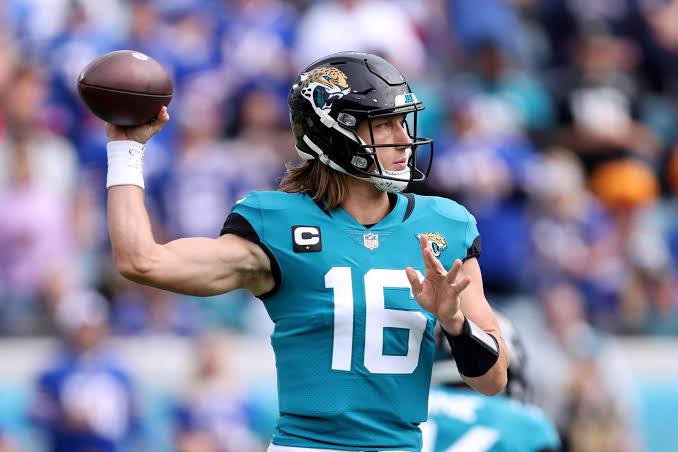
Cam Ward’s rookie season was disappointing from a fantasy perspective, finishing with just 10.98 fantasy points per game. To put that performance into historical context, I looked for quarterbacks with similar rookie production and comparable draft capital.
The goal was to answer one simple question:
How often do quarterbacks with a rookie season like Cam Ward’s go on to become valuable fantasy assets?
I identified 11 quarterbacks with similar rookie seasons and first-round draft capital:
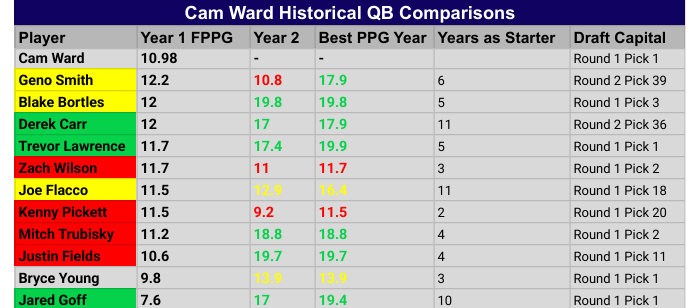
The results were a mixed bag.
Of the 11 quarterbacks in this sample, seven went on to produce at least one strong fantasy season. Eight of the 11 quarterbacks improved their fantasy points per game in Year 2, with six making a significant jump in production.
This is the encouraging part of the data. A poor rookie season does not automatically mean a quarterback is destined to fail. Quarterbacks like Geno Smith, Derek Carr, Trevor Lawrence, Jared Goff, Justin Fields, and Mitch Trubisky all struggled to varying degrees as rookies but were eventually able to provide fantasy value.
However, there is also an important distinction to make.
While many quarterbacks in this group eventually found fantasy relevance, very few developed into the elite or good dynasty assets managers dream of. The quarterbacks who become true difference-makers at the position typically show stronger indicators early in their careers.
Trevor Lawrence is probably the biggest exception in this group. Despite an underwhelming rookie season, he showed the pedigree and talent that made him a highly regarded prospect coming out of college.
The biggest takeaway from this data is that Cam Ward is unlikely to be a complete lost cause. History suggests quarterbacks with similar rookie seasons often bounce back and provide fantasy value at some point in their careers.
However, if the expectation is for Cam to become one of the elite dynasty quarterbacks we consistently value at the top of startup drafts, the historical odds become much more difficult. Elite quarterbacks usually separate themselves early, and Cam will need a significant Year 2 improvement to get back on that trajectory.
Ultimately, this data points to a middle ground: Cam Ward is not someone dynasty managers should write off, but his rookie season did lower the probability of him becoming a true difference-making fantasy quarterback.
What There Is to Like in 2026
While 2025 was a disappointing rookie season for Cam Ward, there are several reasons dynasty managers should remain optimistic heading into 2026.
The Titans have made a clear effort to put Cam in a better position to succeed:
- Brian Daboll hire
- Top-5 pick invested at wide receiver
- Addition of Wan’Dale Robinson
- 12 Money Throws in 2025 (9th in the NFL)
Despite the poor efficiency numbers, Cam still flashed the arm talent and playmaking ability that made him the No. 1 overall pick. His 12 Money Throws ranked ninth in the NFL, showing that the physical tools needed to make high-level NFL throws are still there.
The question is whether better coaching and an improved supporting cast can help him become more consistent.
Brian Daboll’s Quarterback History
Since returning to the NFL from Alabama in 2018, Daboll has consistently been part of fantasy-relevant seasons from his quarterbacks.
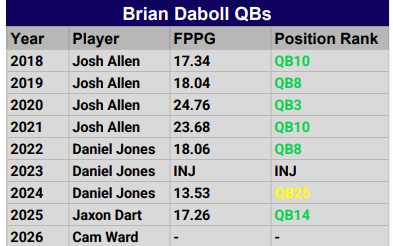
Obviously, Josh Allen’s success is not something that can simply be replicated. However, Daboll has shown an ability to consistently create fantasy-friendly environments for quarterbacks.
In his first season with the Giants, Daniel Jones produced the best fantasy season of his career, finishing as the QB8. More recently, Jaxson Dart stepped into Daboll’s offense and finished as the QB14 in his rookie season.
While Daboll’s success as a head coach has been debated, there is no denying his ability as an offensive mind and his track record of helping quarterbacks develop.
For Cam Ward, this could be the biggest factor in determining whether he takes the next step in 2026.
The Titans Finally Invest in Weapons
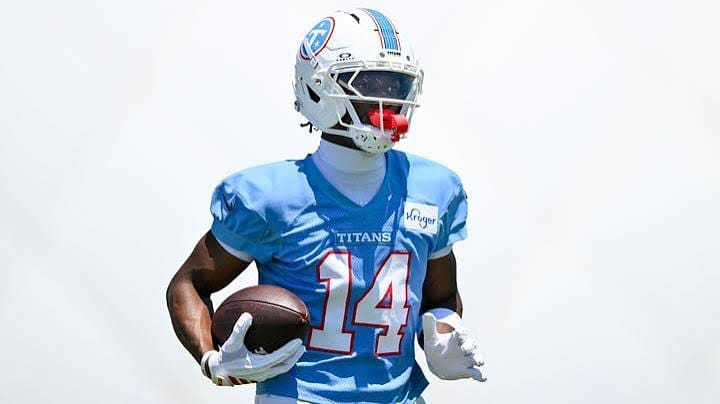
One of the biggest issues for Cam in 2025 was the lack of support around him. The Titans ranked near the bottom of the NFL in receiver separation and supporting cast efficiency, making life significantly harder for a rookie quarterback.
The Titans addressed that problem by selecting Carnell Tate with a top-five pick.
Tate was able to produce at a high level despite sharing the field with one of college football’s most highly regarded wide receivers:
11 Games
- 51 receptions
- 875 yards
- 9 touchdowns
While Tate did not post an elite combine speed score with a 4.53 forty-yard dash, his athletic profile is still impressive given his size and playing style. He has drawn comparisons to CeeDee Lamb due to his combination of size, route running, and ability to win at the catch point.
The biggest appeal with Tate is his ability to consistently create separation through route running and physicality. This directly addresses one of Cam’s biggest issues from 2025: his receivers struggled to create separation, limiting the size of throwing windows available to him.
Tate also brings excellent body control and the ability to adjust to inaccurate throws. Considering Cam ranked near the bottom of the NFL in catchable pass rate, having a receiver who can consistently make difficult catches could be extremely valuable.
For dynasty managers, this is exactly the type of receiver profile you want attached to a young quarterback. A talented, first-round receiver growing alongside Cam gives this offense the potential to develop into a long-term pairing.
Wan’Dale Robinson Could Be the Perfect Safety Blanket
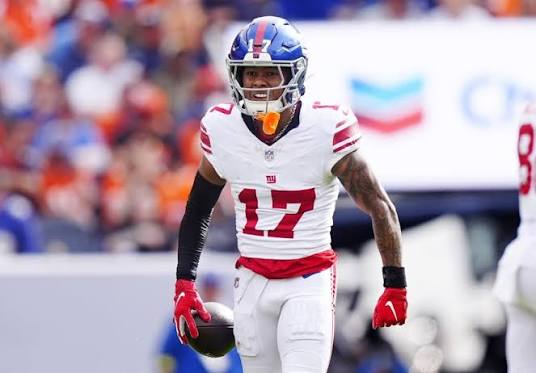
The addition of Wan’Dale Robinson is another move that could benefit Cam Ward.
Robinson and Daboll are already familiar with each other after spending multiple seasons together in New York. In 2025, Robinson had the best season of his career, averaging 13.62 fantasy points per game while finishing with 1,014 receiving yards.
What makes Robinson especially interesting for Cam is the fit.
Robinson led the NFL in slot snaps last season and posted an average depth of target of just 8.5 yards. This creates an opportunity for high-percentage throws closer to the line of scrimmage, which could help a quarterback who struggled with efficiency and consistency as a rookie.
Robinson also brings reliability. He finished the season with just three drops while ranking 15th in the NFL in target separation.
Robinson could be the perfect complement for Ward. This is especially important considering Cam’s first-read throw rate ranked 29th in the NFL last season. A reliable slot receiver who can quickly win off the line of scrimmage gives Cam an easy outlet when his initial progression is unavailable.
For a quarterback who struggled with accuracy, efficiency, and consistency in 2025, having a dependable underneath option could help raise his floor while allowing him to take more calculated shots downfield.
Last Thoughts
When I started researching Cam Ward, I went into this expecting to find confirmation that he was a poor dynasty asset. I believed his disappointing rookie season, combined with his advanced metrics, would show that managers should be looking to move on.
After diving deeper into the data, my opinion has changed.
There is no denying that Cam’s rookie season was disappointing. The advanced metrics raised legitimate concerns, and the historical comparisons do not point toward a high probability of him becoming one of the elite dynasty quarterbacks we consistently value at the top of the position.
However, this deep dive also showed me that Cam Ward is far from a lost cause.
The combination of Brian Daboll’s track record with quarterbacks, improved weapons in Carnell Tate and Wan’Dale Robinson, and the flashes of elite arm talent Cam showed throughout the season give me confidence that he can still become a quality NFL quarterback and a valuable fantasy asset.
His current dynasty ranking around QB16 feels like a fair reflection of his range of outcomes. Managers should not value him like a future elite quarterback, but they also should not treat him like a failed investment.
The most likely outcome is that dynasty managers have a long-term starting quarterback who can provide stability in a superflex lineup. That may not be the return many hoped for when they selected him at the top of rookie drafts, but it is still a valuable outcome.
Not every dynasty investment is either a home run or a complete failure. Sometimes the best move is recognizing the value of a player who may not become elite, but can still help you win championships for years to come.
Explore The Lab.


