
Omar Cooper Jr.: Humble Hands, Relentless Work, and the Quiet Climb
Still a smart addition

LAB REPORTS
Championship dynasty managers understand that leagues aren’t won solely through first-round rookie picks. They’re won by identifying tomorrow’s contributors before the rest of the fantasy community catches on—and by recognizing which early noise is temporary and which traits actually stick.
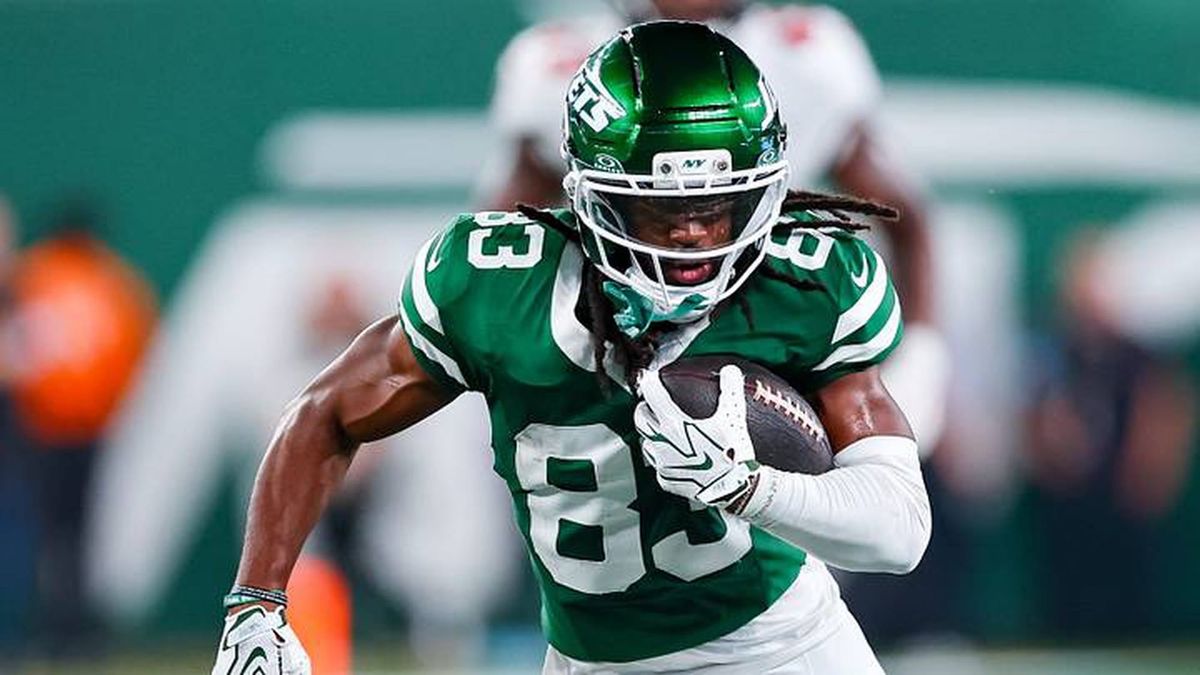
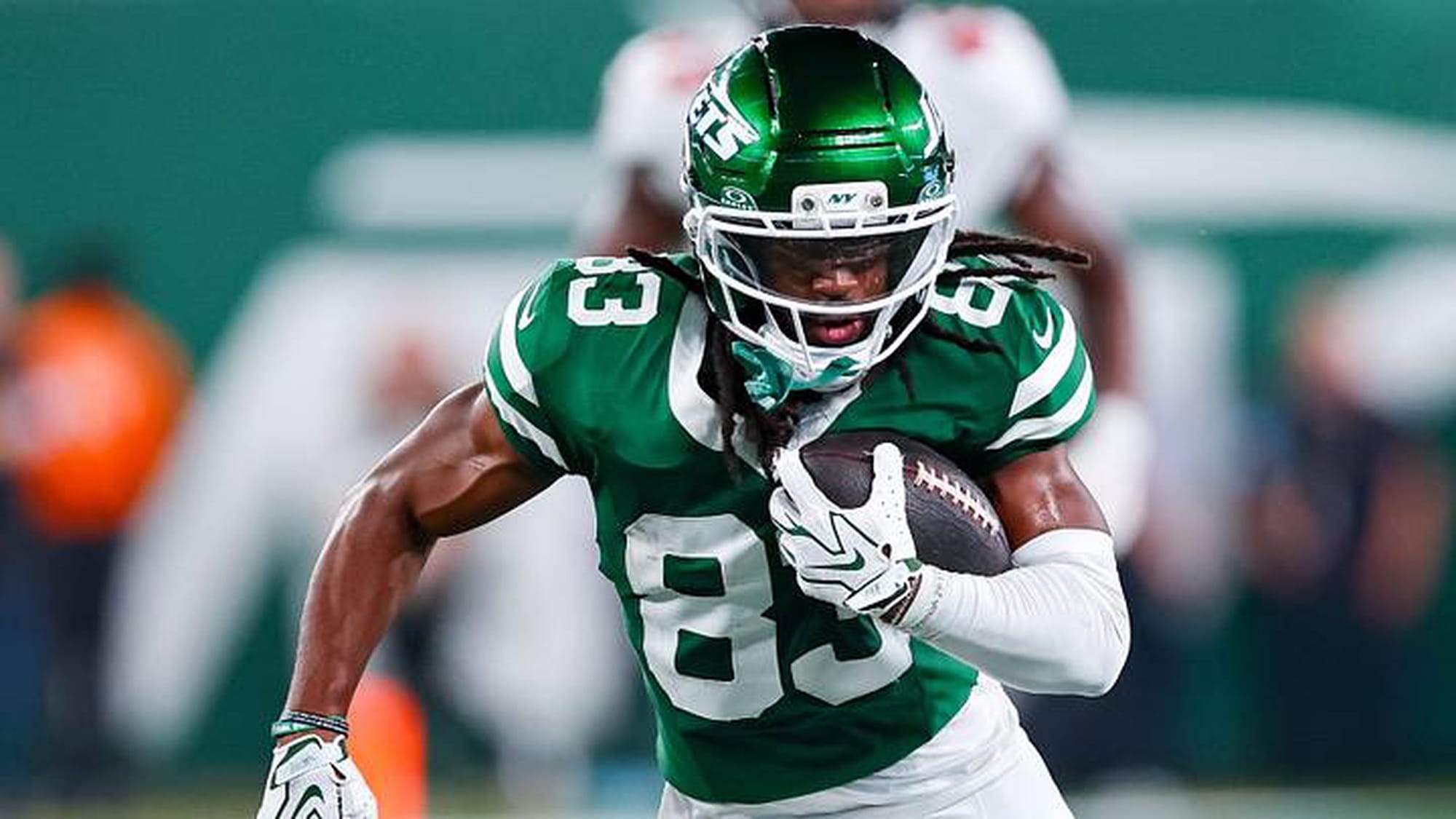
The New York Jets spent a first-round pick—No. 30 overall after trading up—on Indiana’s Omar Cooper Jr. in the 2026 draft. He arrives with national championship pedigree, elite production in his final college season, and a skill set that translated immediately during spring practices.
Yet training camp has brought the familiar friction that comes with being a rookie: “little pitfalls,” as receivers coach Shawn Jefferson put it, along with a temporary leapfrog by Isaiah Williams on the depth chart. Cooper has worked primarily with the backups during early preseason action.
The question isn’t whether Cooper will be perfect in August.
The question is whether the player who already transformed his own trajectory once will do it again—this time under the brighter lights of the NFL.
The evidence says yes.
💪 The Physical and Athletic Profile
Cooper measures 6-foot (6’0⅛”) and 199 pounds with 30¼-inch arms and 9⅝-inch hands. He ran a 4.42 forty with a 1.55-second 10-yard split and posted a 37-inch vertical at the Combine.
Those numbers matter less than how he plays.
Cooper is compact, dense, and violent after the catch. In 2025, he forced 27 missed tackles—one of the highest totals in the draft class—while consistently creating yards after contact. Scouts have repeatedly pointed to his contact balance and short-area creation, with comparisons ranging from a more compact Deebo Samuel to a powered-up Josh Downs.
He isn’t a pure burner who will consistently stack corners vertically without help. But he is sudden enough to stress defenses at all three levels and strong enough to finish through contact.
The athletic profile supports a high floor as a YAC and red-zone weapon, with enough explosiveness to develop into much more.
🥾 The Maturity Arc That Changed Everything
Cooper’s college story isn’t one of uninterrupted dominance.
A four-star recruit from Lawrence North High School in Indianapolis, he redshirted in 2022, flashed in limited action in 2023, and produced efficient but complementary numbers in 2024, catching 28 passes for 594 yards and seven touchdowns while averaging a massive 21.2 yards per reception.
Then Curt Cignetti arrived.
The new staff made the expectations clear: the talent was obvious, but the consistency wasn’t. Cignetti publicly challenged Cooper on maturity, focus, and daily standards.
Cooper responded.
In 2025, he became the Hoosiers’ leading receiver on a 16-0 national championship team, finishing with 69 receptions, 937 yards, and 13 touchdowns while primarily working from the slot.
He also delivered one of the season’s signature plays—a toe-tap touchdown in the final seconds at Penn State that preserved Indiana’s undefeated run.
But the numbers may not be the most important part of Cooper’s 2025 season.
The transformation was.
Cooper has been open about the internal shift. He has talked about changing his practice mentality, refusing to let fatigue or complacency dictate his effort, and leaning on his faith.
“It was a mindset thing,” he said. “I’d come to practice sometimes lazy… Now it’s knowing this is a blessing. Some people don’t get this opportunity. I have to make sure I work hard every day.”
That transformation is one of the most important data points for dynasty managers.
Players who have already demonstrated the ability to identify a weakness in themselves—and then actually fix it—are worth betting on.
⚡️ More Than a Slot Receiver
Cooper’s 2025 role was heavily slot-oriented, with roughly 83–88% of his snaps coming from the inside. But his 2024 tape showed him operating outside and generating vertical production.
He has the body control, hands, and spatial awareness to work from both alignments.
His ball skills are another selling point. Cooper posted a career drop rate below 5% and consistently attacks the football away from his frame while absorbing contact.
The Jets value that versatility.
Garrett Wilson owns the outside alpha role. Adonai Mitchell brings speed. Cooper’s combination of route craft, contact balance, reliable hands, and short-to-intermediate consistency gives the offense a movable chess piece—someone who can win from the slot, move outside in certain packages, and create after the catch in traffic.
For fantasy, that profile can produce the kind of steady target share and touchdown equity that ages well in dynasty.
📈 The Developmental Reality and Camp Noise
Rookie wide receivers hit friction.
Cooper is no exception.
After a strong spring in which multiple reports called him the Jets’ most impressive rookie, training camp has featured the expected “little pitfalls.” Isaiah Williams—originally viewed more as a return specialist—has earned first-team looks and temporarily leapfrogged Cooper in early depth-chart alignments.
Cooper has worked primarily with the second group during preseason action.
That matters.
But it isn’t destiny.
Jefferson has framed the issues as standard rookie growing pains. Cooper’s own approach reflects the same steady mentality he showed at Indiana: focus on the mental adjustment, ask questions of Geno Smith and Garrett Wilson, and keep working.
He has described himself as quiet and coachable—someone who absorbs rather than performs for the cameras.
Those traits matter.
The same mentality that allowed him to answer Cignetti’s challenge in 2025 is the mentality that can help him overcome temporary camp setbacks in 2026.
💯 Why the Jets Fit Still Works
The Jets traded up to select Cooper.
That draft capital alone creates opportunity.
The receiving room has talent, but the offense is still searching for consistent complementary production behind Wilson. Cooper’s skill set—reliable hands, YAC ability, contact balance, and alignment flexibility—maps cleanly onto what modern offenses ask from their WR2/WR3 and slot options.
He doesn’t need to be the alpha in Year 1.
He needs to earn trust, continue refining his intermediate route detail, and prove he can handle the mental side of the NFL game.
Those are solvable problems for a player who has already demonstrated the capacity for rapid growth.
⏰ The Timeline Favors Patience
Cooper turns 23 in December.
He is young, battle-tested in a championship environment, and still entering the physical prime of his career.
Even if 2026 becomes more of a gradual ramp-up, the long-term role remains intact.
Dynasty is rarely about Week 1 depth charts.
It’s about which players keep improving after the initial noise fades.
DHQ Verdict 🏆
★★★★☆ (4/5)
2026 Outlook: Developmental contributor with weekly upside by midseason; strong chance to settle in as a solid WR3/flex option by year’s end.
Ceiling: High-end WR2 with weekly WR1 upside in the right matchups, thanks to his YAC ability and red-zone potential.
Floor: Reliable rotational piece and special-teams contributor who still holds long-term dynasty value.
Buy Window: Now.
The current camp noise is creating temporary softness in Cooper’s dynasty price.
That’s exactly the kind of window dynasty managers should be looking for.
Cooper was already a first-round talent with proven production and a documented growth arc. The early training-camp friction is real, but it’s also the kind of short-term challenge a player with his work ethic and self-awareness has already shown he can overcome.
Stash him with confidence.
The humble, hard-working version of Omar Cooper Jr. has already shown us what happens when he decides the standard isn’t high enough.
That version is the one that tends to win out.
Depth Wins Championships 🏆
Dominate with DHQFootball.com
Explore The Lab.


