Antonio Pierce and the Collapse of Promise
A Study in Leadership and Organizational Failure
LAB REPORTS
A Study in Leadership and Organizational Failure
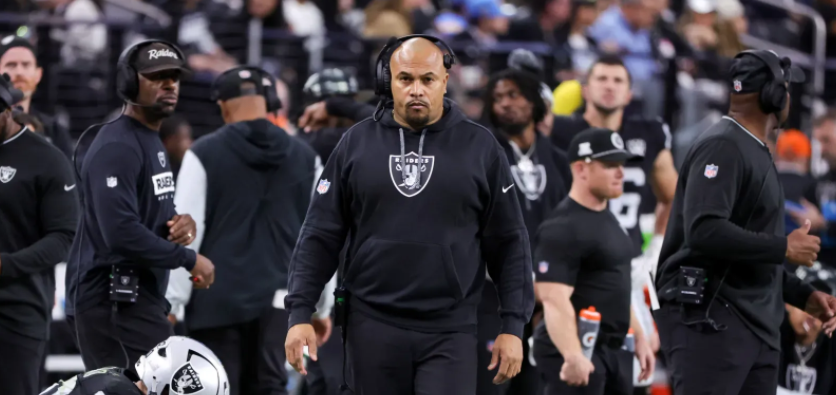
Antonio Pierce’s Raiders tenure is one of the sharper rises and falls in recent NFL history.
A former Super Bowl champion linebacker with the New York Giants, Pierce joined the Raiders as linebackers coach in 2022. On October 31, 2023, after Josh McDaniels and general manager Dave Ziegler were fired, owner Mark Davis elevated him to interim head coach.
What followed looked like a classic players-coach revival.
Unfortunately for Pierce, the Raiders, and their fans, the same qualities that made his interim run so successful proved much harder to sustain over the course of a full season.
Pierce’s story is ultimately a case study in the difference between creating a culture and building an organization capable of sustaining it.
The Interim Surge
Pierce went 5-4 over the final nine games of the 2023 season, but the record only tells part of the story.
The defense, already competent under defensive coordinator Patrick Graham, became elite—allowing a league-low 16.0 points per game during that stretch, generating takeaways, and playing with a physicality and discipline that had been missing earlier in the season.
The Raiders finished the year with the fewest penalties in the NFL, a reflection of the accountability and toughness Pierce emphasized from the moment he took over.
Two signature wins defined the turnaround.
On a Thursday night in December, Las Vegas dropped a franchise-record 63 points on the Los Angeles Chargers in a 63-21 demolition that effectively ended Brandon Staley’s tenure as head coach.
On Christmas Day, the Raiders walked into Arrowhead Stadium and defeated the defending Super Bowl champion Kansas City Chiefs 20-14.
Suddenly, the Raiders had an identity.
The team played with visible swagger.
Victory Cigars.
Mini-hoops in the locker room.
Energy.
A clear sense of belief.
A rookie quarterback in Aidan O’Connell and a defense that believed in its coach made the Raiders feel relevant again. After years of organizational uncertainty, Las Vegas finally appeared to have found a leader who could connect with the locker room.
Players publicly campaigned for Pierce to keep the job.
Raider Nation bought in.
On January 19, 2024, Mark Davis removed the interim tag.
At the time, it felt like the obvious decision.
In hindsight, it was only the beginning of the much harder challenge.
The Organizational Divide
After firing Josh McDaniels and general manager Dave Ziegler midway through the 2023 season, Mark Davis elevated Antonio Pierce to full-time head coach in January 2024.
Shortly afterward, he paired him with Tom Telesco, the longtime Chargers general manager who had recently been fired in Los Angeles.
On paper, the pairing appeared complementary—a fiery, first-time head coach who had just galvanized a locker room and a veteran personnel executive with more than a decade of experience building NFL rosters.
In reality, the challenge was not a lack of talent or effort.
It was alignment.
Pierce had just gone 5-4 as interim coach. He inherited a frustrated roster, installed energy and accountability, and watched the defense transform. The team played with swagger, toughness, and a clear “us against the world” identity.
Players bought in.
Raider Nation believed they finally had a coach who understood the culture.
Pierce believed the Raiders had discovered something.
His mindset was simple: build on what had worked.
He had nine games of evidence that the current group, with the right leadership and continuity, could compete immediately.
Telesco arrived with a different operating philosophy.
His Chargers tenure was defined by patient roster construction, investment in draft capital, and a multi-year approach to building a contender. His preference was to build through the draft, manage the salary cap carefully, and avoid sacrificing long-term flexibility for short-term gains.
Neither philosophy was inherently wrong.
The problem was that the organization never fully reconciled the difference between them.
One man was focused on winning the next game and the next season.
The other was thinking about where the franchise needed to be several years down the road.
The two men publicly spoke about checking egos at the door and finding common ground.
But behind the scenes, the philosophical divide was already visible.
The First Unraveling: Free Agency and the Quarterback Drama
That divide became impossible to ignore once free agency and the draft arrived.
The most painful loss was Josh Jacobs.
Jacobs was more than the team’s lead running back.
He was the heartbeat of the roster.
Pierce repeatedly called him one of the emotional leaders of the team. Jacobs had produced at a high level, including winning the NFL rushing title in 2022, and had publicly supported Pierce’s permanent hire.
He represented everything Pierce wanted the Raiders to become: physical, competitive, and tough.
Yet the organization made no significant face-to-face effort to retain him. Jacobs later said he never spoke with the new general manager about remaining in Las Vegas.
When Green Bay offered him a multi-year contract, the Raiders declined to match or meaningfully counter.
Jacobs left.
Pierce’s public reaction was simple:
“That one hurt.”
The statement was understated.
The loss represented more than losing a talented running back.
The coach who had built his message around loyalty and fighting together watched one of the most important pieces of that culture walk away without a meaningful attempt to keep him.
Other contributors from Pierce’s interim stretch followed.
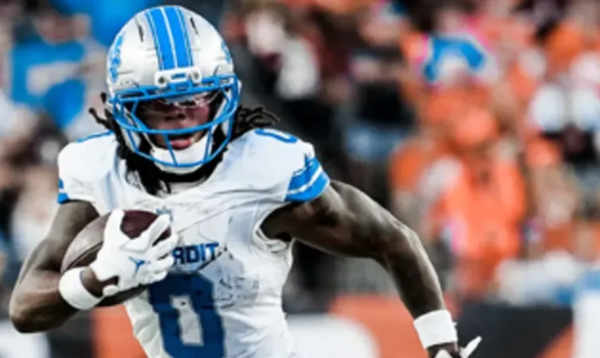
Cornerback Amik Robertson, a tough and competitive defender who had carved out a meaningful role and fit the new identity Pierce was building, signed with the Detroit Lions.
Defensive tackle Jerry Tillery was also released.
The move was notable because Tillery had originally been drafted by Telesco during his time with the Chargers. After Telesco moved on from him in Los Angeles, Tillery landed with the Raiders and provided solid rotational play during Pierce’s 2023 run.
One of Telesco’s early moves in Las Vegas was to move on from him again.
Individually, each roster decision could be defended.
Collectively, however, the impact was significant.
Several of the players who helped create the energy and identity of Pierce’s interim run were no longer part of the future.
The culture Pierce had created was being reshaped before it had a chance to become permanent.
The Quarterback Divide
The quarterback situation amplified the organizational divide.
Pierce had a personal connection to LSU quarterback Jayden Daniels from their time together at Arizona State and reportedly supported making an aggressive move to acquire him.
The Raiders explored the possibility of trading up in the draft, with Pierce believed to be in favor of making the bold move.
Telesco was more cautious about the cost in draft capital and instead signed veteran Gardner Minshew to a two-year, $25 million contract to compete with Aidan O’Connell.
The decision highlighted the philosophical difference between the two leaders.
Pierce wanted a potential franchise quarterback who could accelerate the turnaround and match the urgency he felt after the team’s late-season surge.
Telesco preferred a safer veteran option while continuing to build the roster around the quarterback position.
Again, neither approach was unreasonable.
The issue was that the organization was not operating from one unified vision.
Minshew ultimately won the starting job in training camp, but the offense never found consistency.
The decision became the clearest example of the larger challenge facing the Raiders.
One man was trying to win the next game and the next season with the group that had just responded.
The other was operating with a longer-term plan.
When those two philosophies collide inside the same building, maintaining organizational unity becomes extremely difficult. And when the culture that fueled a turnaround begins to erode, the head coach often loses the very foundation that made him successful in the first place.
The Overloaded Coaching Staff That Diluted Authority
Pierce assembled one of the largest coaching staffs in the NFL—roughly 31 coaches.
The intention was clear: surround himself with experience.
The staff included former head coaches and coordinators such as Marvin Lewis, who served as assistant head coach, Rob Ryan, Joe Philbin, and a combination of veteran coaches and younger assistants. Pierce wanted to create a staff with enough football knowledge and experience to help guide him through his first full season as an NFL head coach.
The problem was that experience does not always equal clarity.
When a first-time head coach fills his staff with people who have held larger titles or longer résumés than he has, the challenge becomes maintaining a clear chain of command.
Decision-making can slow.
Messages can become inconsistent.
The head coach’s voice can become one among many.
The swagger and clarity Pierce projected during his interim run came from a direct connection with his players. The message was simple: accountability, toughness, and belief.
The expanded structure created a different dynamic.
Instead of reinforcing Pierce’s voice, the staff structure risked diluting it.
Midway through the season, Pierce fired offensive coordinator Luke Getsy, quarterbacks coach Rich Scangarello, and offensive line coach James Cregg. The midseason overhaul was a clear indication that the original offensive structure was not working.
For a first-time head coach, changing direction is sometimes necessary.
But it also revealed another challenge Pierce faced: building the right system around him.
Leadership is not just about having the right message.
It is about creating the structure that allows that message to survive.
The Accountability Gap
Pierce built his reputation on toughness, standards, and the “Raider Way” of accountability.
But over time, some of his actions did not always align with the standard he preached.
The situation involving Davante Adams became the clearest example.
Adams missed significant portions of training camp following the birth of his child. When asked about preseason participation, Adams stated that if the decision were entirely his, he would prefer not to play.
Pierce responded publicly that healthy players would play.
Adams ultimately sat out.
The disagreement itself was not necessarily the issue.
Veteran players and coaches often have different perspectives on preparation, injuries, and workload.
The problem was what followed.
Over the course of the season, the relationship between Adams and the organization deteriorated. Frustration grew, communication appeared limited, and eventually Adams requested a trade.
Pierce also faced criticism for comments following losses, including his reference to players making “business decisions” after a poor performance.
To some players, those comments felt less like accountability and more like public criticism.
In a locker room that had responded so strongly to Pierce’s authenticity during his interim run, those moments mattered.
Leadership is measured not only by the standards a coach sets, but by whether players believe those standards are applied consistently.
The culture Pierce created was built on trust.
Once trust begins to erode, even the strongest messages lose their impact.
Personal Conduct and Distraction
In the summer of 2024, bankruptcy filings involving Pierce’s wife revealed judgments totaling more than $28 million stemming from personal guarantees related to failed car dealership investments from the 2010s.
Creditors had attempted to garnish Pierce’s Raiders wages.
The matter was later settled for a substantially lower amount, but the timing created an unnecessary distraction during his first full season as head coach.
The issue was not simply the financial situation itself.
Many people in professional sports have dealt with personal financial challenges.
The challenge for a head coach is perception.
Leadership requires credibility, judgment, and the ability to eliminate distractions. When personal matters become public, they inevitably become part of the conversation surrounding the organization.
For Pierce, already navigating questions about structure, accountability, and performance, the timing created another obstacle.
The Quarterback and Scheme Failures
The offensive struggles ultimately became impossible to overcome.
Under Luke Getsy, the Raiders never developed a consistent offensive identity.
The quarterback situation remained unsettled, the passing game lacked rhythm, and the offense struggled to create sustained production.
Pierce also faced criticism for in-game decisions, including conservative fourth-down choices, clock management issues, and questionable challenge decisions.
To be fair, the Raiders dealt with legitimate obstacles.
Injuries, especially along the defensive line, impacted the team.
The Davante Adams situation created instability.
The roster still had significant holes.
But head coaches are ultimately judged on their ability to solve problems.
The inability to stabilize the offense, create a functional scheme, and establish consistency fell on Pierce and the staff he assembled.
The result was a 4-12 season and a last-place finish in the AFC West.
Although the Raiders remained competitive late in the season and won two of their final games, the damage had already been done.
On January 7, 2025, the Raiders moved on from Pierce.
Telesco followed shortly afterward.
The organization had once again entered another reset.
The Conspiracy Layer and Organizational Context
Whenever a high-profile coaching change happens, speculation inevitably follows.
Antonio Pierce’s departure was no different.
Some rumors suggested that Tom Brady, after joining the Raiders’ ownership group, was never fully invested in Pierce as the long-term answer, with some pointing to their history as players and perceived body language during Brady’s ownership introduction.
Others suggested that lingering tension between Pierce and Telesco, possibly dating back to the Raiders’ 63-21 victory over the Chargers, contributed to the organizational disconnect.
Those theories remain unproven.
The reality is likely less dramatic and more revealing.
The Raiders’ collapse was not caused by one conversation, one relationship, or one behind-the-scenes disagreement.
It was the result of multiple issues converging at the same time:
A first-time head coach learning the difference between motivating players and managing an entire organization.
A veteran general manager operating with a different timeline and roster-building philosophy.
An oversized coaching structure that created questions about authority.
Accountability standards that became difficult to maintain consistently.
And personal distractions that added unnecessary pressure during a critical season.
Together, those factors eroded the culture Pierce had briefly built.
Mark Davis has cycled through multiple head coaches since taking over the Raiders after the death of his father. The pattern has become familiar: the Raiders find a leader who creates immediate energy and excitement, but the organization struggles when that initial momentum must evolve into a sustainable system.
Pierce was not solely responsible for the 2024 collapse.
The roster had limitations.
The quarterback position remained unsettled.
The organization itself had experienced years of instability.
But the head coach ultimately owns the culture, the standards, and the ability to adapt when circumstances change.
That is where Pierce fell short.
Leadership Lessons
Antonio Pierce succeeded as an interim coach because the circumstances were simple.
There was a clear enemy: the previous regime.
There was a limited time horizon.
There were no long-term roster decisions to make.
His job was to restore confidence, reconnect with the players, and change the emotional direction of the team.
He did that.
And he did it exceptionally well.
The challenge came when the job changed.
As a full-time head coach, Pierce was no longer simply responsible for motivating a locker room.
He was responsible for building an organization.
That required alignment with the front office.
A clear leadership structure.
Consistent standards.
A sustainable football philosophy.
And the self-awareness to recognize where he needed help.
Those were the tests that ultimately exposed the gap between being a great motivator and being a complete CEO-style leader.
The core failure was not a lack of passion.
It was not a lack of football knowledge.
It was the inability to scale the authentic leadership that worked during a crisis into a system capable of surviving success, adversity, and organizational pressure.
Interim success often rewards charisma, urgency, and emotional connection.
Long-term success requires much more.
It requires structure.
It requires alignment.
It requires consistency.
And perhaps most importantly, it requires the humility to understand that the same approach that saves a struggling organization may not be the same approach that builds a championship one.
Final Thoughts
Raider Nation briefly believed it had found its coach.
And perhaps that belief was not misplaced.
The version of Antonio Pierce who took over in late 2023 was real.
The energy was real.
The connection with players was real.
The culture was real.
But culture is fragile.
It can be created quickly through authenticity and shared purpose, but sustaining it requires something far more difficult: organizational alignment, consistent leadership, and systems strong enough to survive change.
The swagger was real in late 2023.
The failure came afterward—not because Pierce lacked the ability to inspire, but because inspiration alone is not enough.
Great leaders do not just create belief.
They build something that continues when the emotions fade.
That remains the lasting lesson from Antonio Pierce’s brief Raiders tenure: the difference between changing a culture and sustaining one is where leadership is truly tested.
Explore The Lab.