The Jets' Defense Has New Coaches, Not New Talent. Here's What That Means for Every Other Offense in the AFC East.
Defense
LAB REPORTS
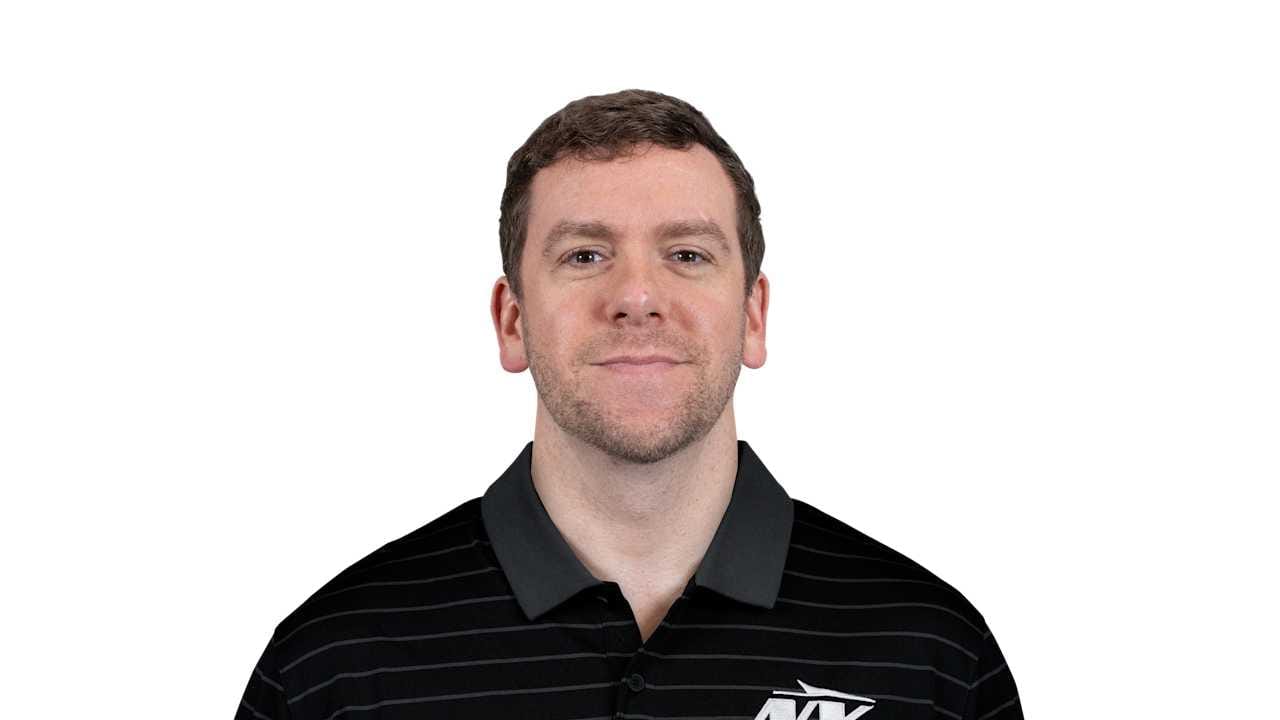
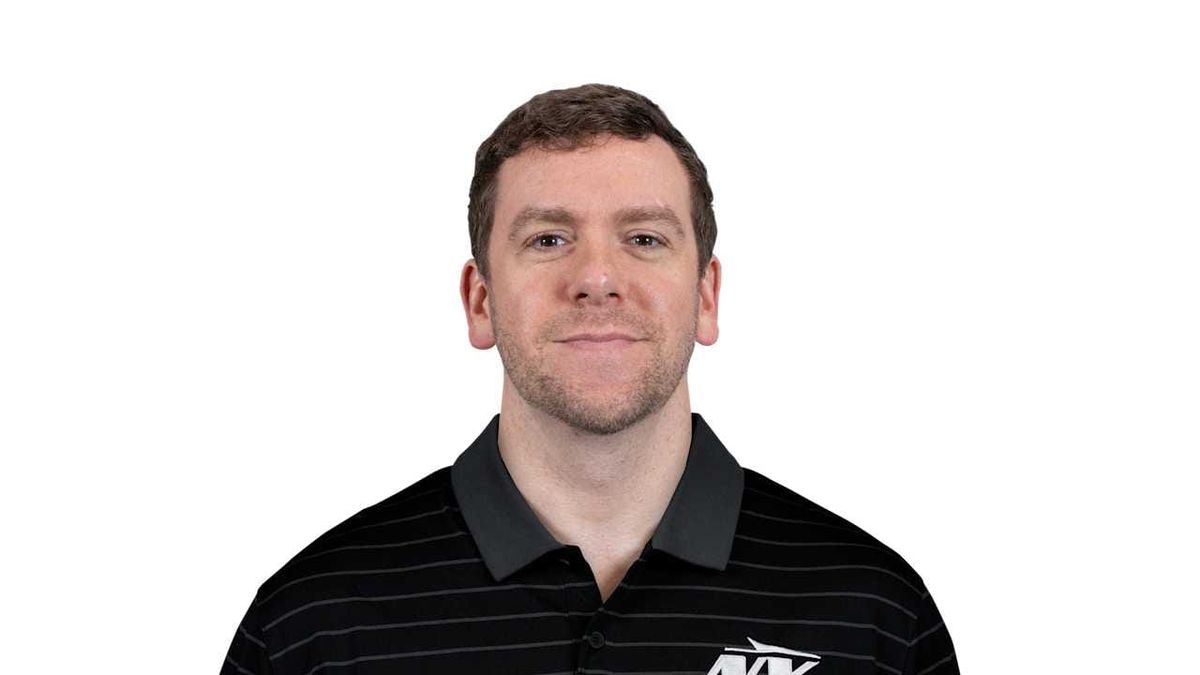
Start with the baseline: the 2025 Jets were the first team in NFL history to go an entire season without intercepting a pass. Thirty-first in scoring, twenty-fifth in yards, thirtieth in sack rate, thirtieth in EPA allowed. Four total turnovers forced, an all-time low. They traded away their two best defenders, Sauce Gardner and Quinnen Williams, before the season was even over. That's the roster Brian Duker is inheriting as the Jets' new defensive coordinator, and it's the context every AFC East dynasty holder needs before getting excited or worried about what comes next.
Aaron Glenn's Defense, On Paper
Glenn's calling card as a coach is the same as his calling card as a player: physical, press-man coverage married to single-high shells. Cover 1 and Cover 3 as the base, stacking the box to make quarterbacks win outside the numbers instead of letting them work the middle for free. It's not a scheme that survives on scheme. It survives on defensive backs who can win one-on-one reps at the line, and on interior defenders stout enough to command doubles so the edges can rush vertically instead of two-gapping.
In Detroit, that formula worked. His final season as Lions DC, that defense ranked first in the league in third-down conversion rate allowed (32.4%) and first in opponent passer rating (82.0), on the back of two straight deep playoff runs. Kerby Joseph became an All-Pro under him. Brian Branch became a Pro Bowler under him. That's the pedigree Glenn brings to New York. It's also worth saying plainly: none of that happened with Sauce Gardner-level corners walking through the door. Glenn built it with development.
Brian Duker, the Actual Play-Caller in Waiting
Duker is 36, and Glenn is expected to call the defense himself in 2026 because Duker has zero play-calling experience. That's not a knock, it's just where he is in his career arc. What he does bring is three years next to Glenn in Detroit (defensive assistant in 2021, safeties coach in 2022, DBs coach in 2023) and two years running Miami's pass game as secondary coach and pass-game coordinator.
The scheme fit is obvious on tape: split-safety shells with heavy post-snap rotation, designed to disguise coverage until the last possible second and force quarterbacks into hesitant, late decisions. His DBs are coached to play downhill on anything intermediate and win contested catches rather than just discourage them. It worked in Miami. That defense finished fourth in yards allowed per game (314.4) and sixth in opponent third-down conversion rate (35.9%), with a top-10 opponent passer rating. In Detroit before that, his secondary produced three defensive backs with at least three interceptions apiece in a single season, part of the group that got the Lions to their first conference title game in three decades.
So the coaching pedigree is real on both sides. The problem is talent. Gardner and Quinnen are gone. The Jets have needs at safety, linebacker, corner, and defensive line depth, and nine of their top thirteen snap leaders from a historically bad unit are still on the roster. A good defensive mind schemed up a historically bad defense's talent level doesn't turn into a good defense overnight. It turns into a defense that's less embarrassing. That's the framework for grading how this actually touches the rest of the division.
Patriots: Drake Maye, the Backfield Split, A.J. Brown
New England is coming off a Super Bowl trip, and this offense got materially more dangerous this offseason. The Patriots traded for A.J. Brown, sending Philadelphia a 2028 first and a 2027 fifth, and added Romeo Doubs on top of it while moving on from Stefon Diggs. That's not a team that needs to fear a rebuilding Jets secondary twice a year. Brown topped a 23% target share in four straight seasons before the trade, matched only by Amon-Ra St. Brown over that stretch, and Drake Maye now has a legitimate alpha X to throw to. If Duker's disguise-heavy shells are still finding their footing with unproven personnel in September, Brown is exactly the kind of contested-catch, separation-at-all-levels receiver who exploits early-season growing pains. I'd bank the AFC East games as plus matchups for Brown in dynasty terms, not neutral ones.
The backfield is the more interesting dynasty question, and it has nothing to do with the Jets. Rhamondre Stevenson outproduced TreVeyon Henderson across nearly every efficiency marker when both were healthy last year: 61.8% snap share to Henderson's 36%, 2.64 yards after contact per attempt to 1.87, 13.0 fantasy points per game to 8.3. And yet current ADP has Henderson going more than two rounds earlier. That's a market betting on upside over the actual workload distribution, and workload is what dynasty value is built on. Stevenson is 28 and has fumbled ten times over his last 20 games, which is the real threat to his role, not Henderson's big-play flashes. I'd rather own the back who's already winning the job than the one people assume will take it.
Dolphins: Malik Willis, De'Von Achane, and a WR Room With No Answers
Miami is the division's clearest reset button. Tua is gone, Malik Willis is the new $67.5 million bridge quarterback, and the receiver room lost both Tyreek Hill (released) and Jaylen Waddle (traded to Denver) in the same offseason. What's left is Malik Washington as the presumptive WR1 by default, a 25-year-old with 72 career catches and a 7.5 yards-per-catch average built almost entirely on yards after the catch. Jalen Tolbert and Tutu Atwell were brought in as free agent depth, and three rookies were drafted, but nobody in that room profiles as a real vertical threat yet.
That matters specifically against what Duker is building. His whole coaching identity is stopping exactly this kind of offense: short, YAC-dependent routes, DBs drilled to drive downhill on anything in front of them and win the catch point. Duker spent the last two years literally coaching against these route concepts in the AFC East and now gets to defend against a Miami passing game that has nothing else to lean on. That's a rough matchup projection for Washington and the rest of Miami's receivers twice a year, and it pushes even more of the offense onto Achane, who just signed a four-year, $68 million extension and led the team with 67 catches last season. Achane remains the correct player to roster in Miami's offense. Everyone catching passes behind him is a much tougher hold.
Bills: Josh Allen's Weapons Against Man-Heavy Coverage
Buffalo added DJ Moore from Chicago this offseason to be the true WR1 they haven't had since Diggs, but the early scouting consensus isn't flattering. ESPN's Bill Barnwell called him one of the least imposing top receivers in the league and questioned whether he actually upgrades the room. Against a defense built on press-man principles, that's a real concern. Moore's game has always leaned on route craft and separation quickness rather than winning contested vertical shots, and Glenn's corners are coached to be physical at the line specifically to take that away.
Dalton Kincaid is the more interesting name here. He's the biggest offensive swing factor on this roster, Buffalo already exercised his fifth-year option through 2027, and he was the NFL's most productive tight end on a per-snap basis last season when healthy. Tight ends working the seam are historically the release valve against single-high, man-heavy shells like Glenn runs, since the defense's numbers are geared toward stopping outside receivers, not big bodies working the middle of the field. If Kincaid stays on the field, and that's been the real question of his career, he's set up well against exactly this look twice a year.
James Cook is the safest asset of the group regardless of scheme. He led the NFL in rushing last year, the first back out of Buffalo to do that since O.J. Simpson in 1976, and Joe Brady, promoted from offensive coordinator to head coach this offseason, has already signaled a pass-happier approach built around screens. Cook doesn't need Glenn's secondary to slip up. He just needs the ball in space, and Buffalo's offensive design is actively working to get him more of it in 2026.
The Bottom Line
Don't overreact to the coaching change itself. Glenn and Duker are both legitimate defensive minds with real track records, but they're walking into a talent hole after trading away their best two players mid-season. The names that move the needle in the division are the ones tied to actual personnel shifts: A.J. Brown in New England, DJ Moore and a more pass-heavy Bills offense in Buffalo, and a Dolphins receiving corps that got worse at the exact moment they're walking into a defense built to exploit that weakness. Roster accordingly.
Explore The Lab.


Recent Lab Articles.
Read more
Sean Burke
LAB REPORTS LFX OVERALL By: The Lab --/--/-- Sean Burke Has Been Dominant Over His Past Six Starts, Shaping up to be a Second-Half League Winner Now that the first half of the season is officially behind us, it's a great time for us to look ahead at
Bullpen Notes
7/19
Signal or Noise: Jonathan Brooks
He hasn't played a meaningful NFL snap. He's torn the same ACL twice. He's also 23 years old, looks explosive in OTAs, and is walking into one of the cleaner backfield situations in the league. So which part do you believe?
GHOST REPORT: The Three Tight Ends the Market Hasn't Priced In For 2026
A Fantasy & Dynasty deep dive on scheme, target share, and the TEs about to break the room