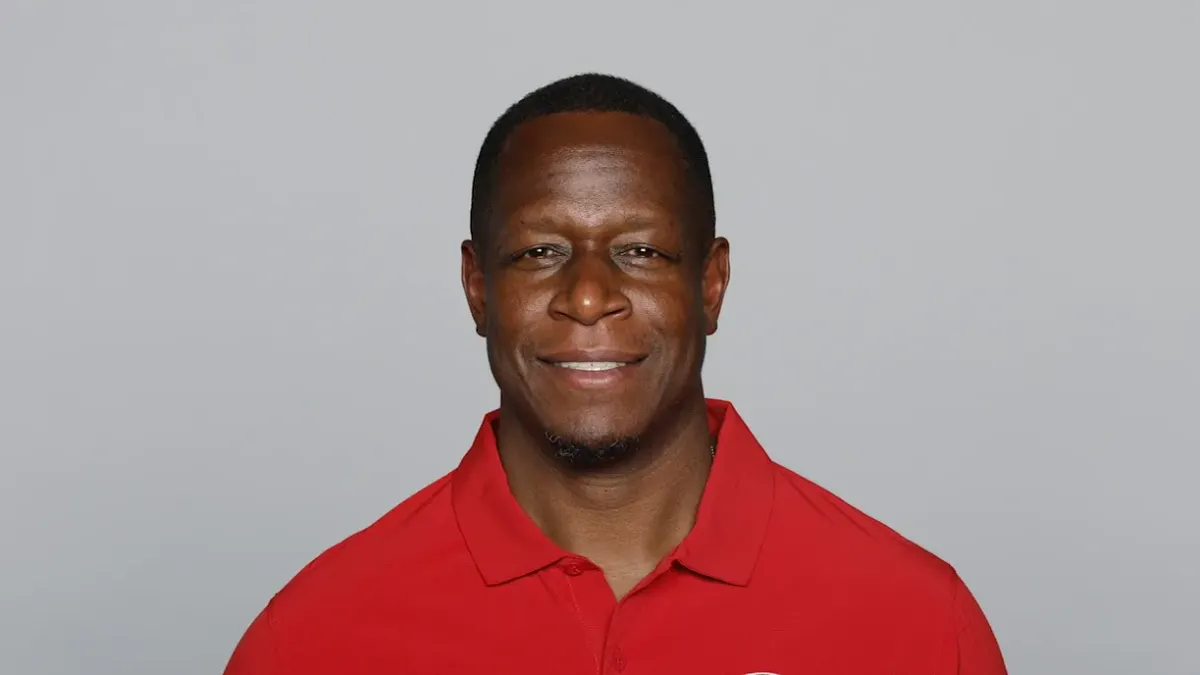
Raheem Morris Is the 49ers' Fifth Defensive Coordinator Since 2022. He Might Be the One Who Sticks.
Defense
LAB REPORTS
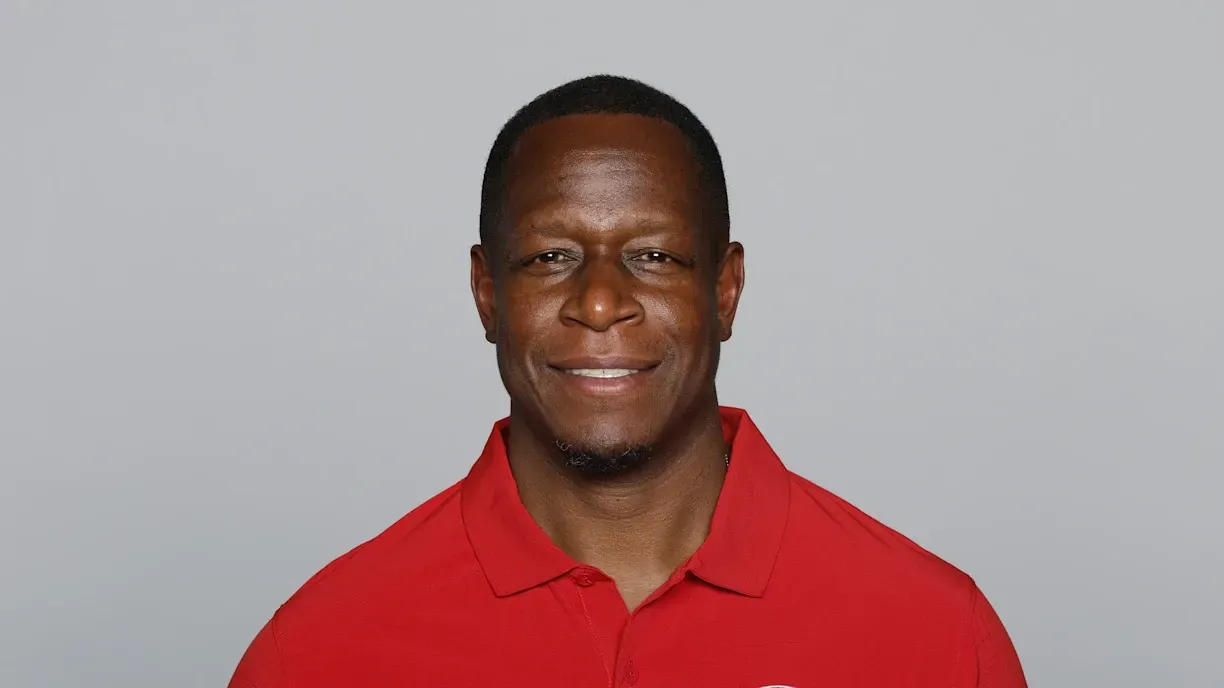
San Francisco's defense finished 20th in yards allowed and 13th in points allowed last season, numbers that look middling until you remember Nick Bosa and Fred Warner both went down with season-ending injuries early, and the unit still dragged a 12-5 team to the divisional round. That's the context Raheem Morris is walking into. Kyle Shanahan has now churned through DeMeco Ryans, Steve Wilks, Nick Sorensen, and Robert Saleh at defensive coordinator since 2022, and Saleh's exit to become the Titans' head coach opened the door for Morris, who Shanahan has been trying to hire since 2017.
Morris isn't a reclamation project. He won Super Bowl LVI as the Rams' defensive coordinator in his first season on the job, spent three years there total, then took the Falcons' head coaching job in 2024 and lasted two seasons before getting let go after back-to-back 8-9 finishes. Whatever went wrong in Atlanta, it wasn't the defensive install. Now he's back in the NFC West on the other side of one of the division's defining rivalries, and the scheme change is real enough to matter for every offense that has to face San Francisco twice a year.
The Scheme Shift
For most of the last decade, San Francisco's defensive identity has been Pete Carroll's old Seattle blueprint run through Shanahan's staff: Wide-9 fronts, single-high safety, Cover 3 as the default answer. It's a system that wins with talent and predictability in equal measure, which is also its weakness. Good play-callers learn to read the pre-snap picture and attack the seams and flats it leaves open.
Morris runs something structurally different. His base look shows two deep safeties before the snap, split-safety shells like Cover 2, Cover 4, and Cover 6, then rotates into the actual coverage after the ball is snapped. Quarterbacks who lean on pre-snap motion to diagnose coverage, which describes most of the play-callers in this division, get less to work with. The read now has to happen in real time.
The fit with San Francisco's personnel is the interesting part. Defensive line coach Kris Kocurek wants his edges aligned wide for an immediate vertical rush, which leans on the interior to control gaps on the move. Morris has historically preferred tighter fronts that squeeze the B-gaps and force runs to bounce horizontally. Expect a blend: the vertical Wide-9 look on passing downs, odd-front spacing on early downs to protect the second level.
Fred Warner is the player this scheme was built for, whether Morris intended it that way or not. In a single-high system, the middle linebacker plays in conflict, dropping deep to rob crossers while still watching the checkdown. In Morris' match-quarters look, Warner gets to play downhill on anything intermediate because there's safety help behind him, and when Morris dials up his version of Tampa 2, Warner has the range to run the seam like a third safety. It's the same role that made him a problem for the Rams' offense the past three years, just aimed the other direction now.
The tradeoff is the run front. Keeping safeties deep to take away explosive plays means San Francisco will frequently defend the run with a light box, six defenders instead of seven or eight. That only works if the line stays disciplined enough to control blocks rather than shoot gaps and let Warner and Dre Greenlaw clean up sideline to sideline. If it holds, it pushes offenses into third-and-long, which is exactly where Morris wants to unleash the pass rush and get creative with coverage disguise.
What It Means for the Rest of the Division
Los Angeles Rams
Nobody on this roster is walking into a Raheem Morris defense blind. Morris was the architect of this Rams team before he left for Atlanta, and he helped them win a Super Bowl.
Matthew Stafford is coming off an MVP season and the Rams didn't sit still this offseason, trading for Myles Garrett and Trent McDuffie to load up around him and Puka Nacua, who led the league in receptions last year. None of that changes the fact that Stafford's best work comes from pushing the ball down the seams, which is precisely what split-safety shells are designed to close off. I'd expect more checkdowns and shorter completions in these two games a year than Stafford's season averages suggest, capping the ceiling even though the floor stays fine with this much talent around him.
Kyren Williams splits carries with Blake Corum now, and neither profile is built to beat a Morris run front. Since Morris took over Rams defenses back in 2021, his units have consistently graded near the top of the league against the run, disciplined edges and gap integrity being the whole point. With Warner now doing that work for the other team, Williams is more touchdown-dependent than usual in these matchups, leaning on goal-line work rather than sustained volume.
Puka Nacua is the one who might actually benefit. Morris likes his corners playing soft and off to protect against anything over the top, which opens a steady underneath diet of curls, hitches, and outs. Nacua already owns the NFL's all-time receiving-yards-per-game average, and that YAC ability travels well against exactly this coverage shell. His ceiling takes a hit in these games. His floor doesn't.
Seattle Seahawks
Seattle just won Super Bowl LX, and Mike Macdonald's offense is fast, well-schemed, and built to attack rhythm and space. Morris' defense is built to take that rhythm away.
Sam Darnold has had real success when he's comfortable in the pocket, and disguised coverage is the thing that's given him the most trouble across his career. Morris shows one look before the snap and rotates into something else entirely at the snap, Cover 2 morphing into Cover 4 or vice versa, and that's a legitimate interception risk for Darnold in these two games specifically.
Jaxon Smith-Njigba is built for the other side of that coin. With safeties staying deep to protect the boundary, the middle of the field opens up, and Smith-Njigba's game lives in exactly that space. Expect a heavy target share on intermediate and slot routes, the kind of usage that keeps a receiver's weekly floor high even in a tougher matchup.
The backfield is the murkier read. Kenneth Walker III, the reigning Super Bowl MVP, left for Kansas City in free agency, and Seattle spent a first-round pick on Jadarian Price to replace him while Zach Charbonnet works back from a February ACL tear. George Holani has been splitting first-team reps with Price through OTAs and looks like the early-season lead if the Seahawks want experience over upside in Week 1. Either way, a Morris run front that's graded top-five in success rate under his previous stops is a tough proving ground for a rookie or a committee back, and touchdowns will likely be the more reliable source of value than early-down volume against this specific matchup.
Arizona Cardinals
Arizona is the more chaotic team in the division and also the one with the most talent concentrated at three positions.
The quarterback situation is unresolved. Jacoby Brissett is technically the incumbent after going 1-11 as a starter last year in relief of an injured Kyler Murray, who's since been released, but Brissett is currently holding out in a contract dispute, which could open the door for third-round rookie Carson Beck to start as early as Week 1. Whoever's under center, Morris' defense is going to force long, patient drives rather than surrender the cheap explosive play he's built his career around avoiding. That's a dangerous proposition for a rookie especially, since holding the ball too long against this front means dealing with Nick Bosa.
Trey McBride should be fine regardless of who's throwing him the ball. When deep safeties stay home to protect the boundary, tight ends tend to find room underneath and in the seam, and McBride is already the focal point of this passing game no matter the opponent.
Jeremiyah Love, the No. 3 overall pick and the highest running back taken since Saquon Barkley in 2018, built his college profile on home-run, explosive runs, which is exactly the outcome Morris' defense is designed to eliminate. His path to fantasy relevance in these two games likely runs through the passing game rather than busted long runs on the ground, at least early in his rookie season.
Marvin Harrison Jr. is a legitimate vertical threat, and Morris' split-safety rules are built specifically to bracket that kind of receiver. Expect him to have to win on comebacks and back-shoulder throws rather than getting behind the coverage. Michael Wilson, working the other side, should see the softer looks that come with all that attention on Harrison, a quiet source of target volume even if the ceiling stays capped.
Explore The Lab.


Recent Lab Articles.
Read more
The Weekly Wood Chipper- Week 17 (July 27-August 2)
Braves Fans Rejoice With Acuna Jr. Return, Andruw Jones HOF Celebration, Incoming Trade Deadline & Abrams Shines
Numbers, Not Names
Can you spot the keeper when the information at hand is based solely on statistics posted through July 23, 2026 and not the name of the player?
Weekend Hitters Recap
Catch up on all things hitters from the weekend
Bullpen Stock Watch
7/27