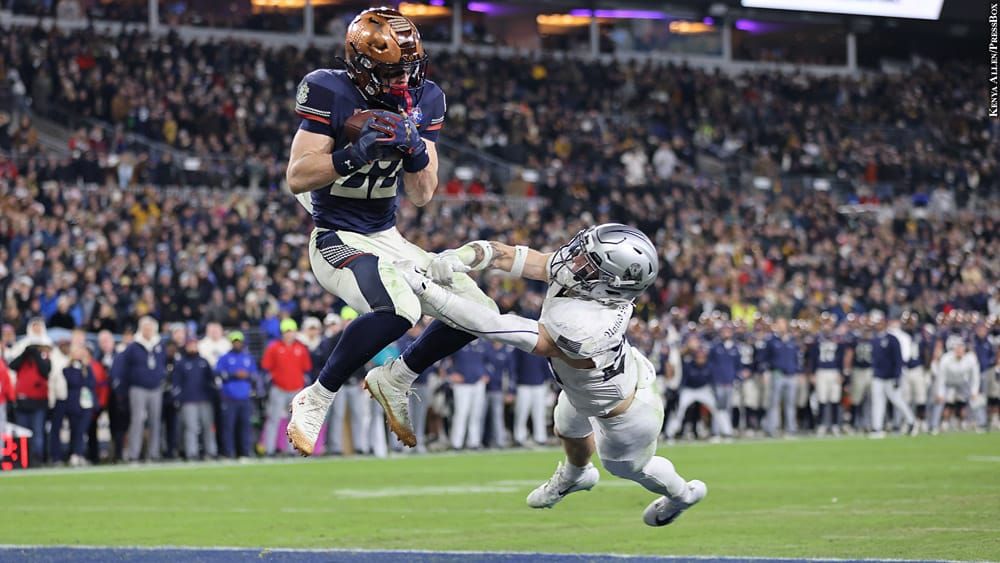
Eli Heidenreich is the Late-Round Dart the Data is Begging You to Take
Eli Heidenreich led Navy in receiving as a running back and left as the academy's all-time leading receiver. My RB Cliff study says that exact profile is the single strongest late-round signal there is. Here is the honest case, floor and ceiling.
LAB REPORTS
Eli Heidenreich led Navy in receiving as a running back and left as the academy's all-time leading receiver. My RB Cliff study says that exact profile is the single strongest late-round signal there is. Here is the honest case, floor and ceiling.
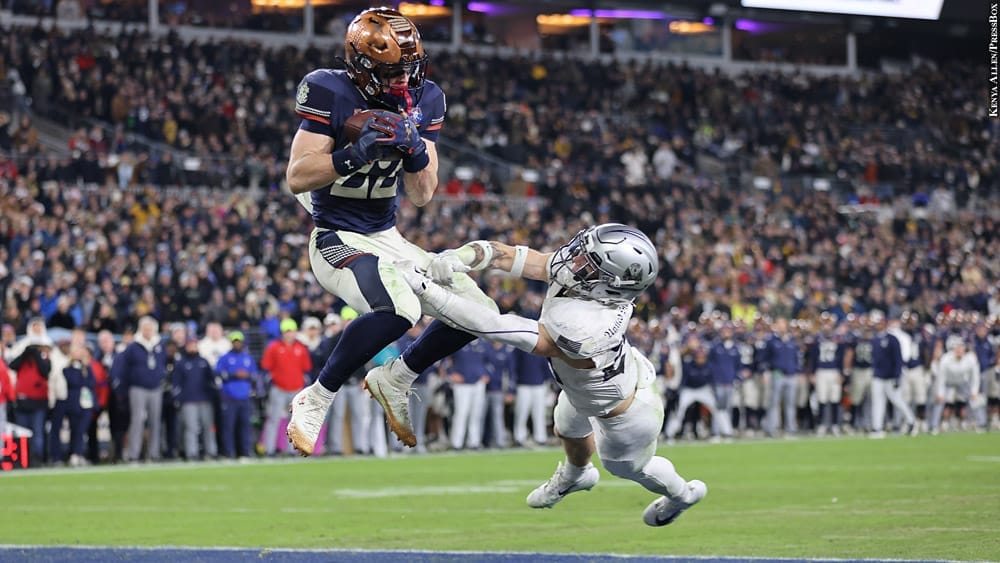
A few weeks ago I pulled every running back drafted since 2008, all 388 of them, and chased this question: what actually flags a late-round back worth a roster spot? The round on the card barely matters once you reach Day 3. Athletic testing barely matters. One trait beat everything else, and it isn't the one everybody obsesses over... It's college receiving production. So, let me introduce you to the player who maxed out that exact signal, and who happened to slide to the seventh round.
The Profile My Data Screams For
In the study, college "pass-catching" backs (the top third by college receiving yards) posted a top-12 fantasy season 32.4% of the time, during their career. Everyone else hit at 9.7%. That's more than triple the rate, found using only one college trait. Heidenreich doesn't just belong in that group, he's its poster child: a running back who led Navy in receiving and walked away as the academy's all-time leading receiver with 1,994 career yards. This is the signal, maxed out.
The Production is Historic
In 2025 he went 499 rushing and 941 receiving ➡️ one of only TWO FBS players since 1956 to clear 475 rushing and 925 receiving in the same season. The other name on that short list is Tavon Austin. And the efficiency underneath it is the part that should stop you: he averaged 18.3 yards per reception for his career, as a "running back," and dropped just four passes on 172 career targets. PFF graded him as the No. 2 receiver among all position players with at least 50 targets. Elite hands and elite explosiveness at the catch point, from a player listed in the backfield.
The Athletic Profile is Real, Not a Navy Mirage
The easy way to dismiss a service-academy option player is "system product." The testing says otherwise. At the Combine he ran a 4.44 forty and posted a 9.23 Relative Athletic Score as a receiver (9.05 as a back), with a 36-inch vertical, a 10-foot broad jump, and a 6.55 three-cone that landed in the 98th percentile. That is a genuinely explosive, twitchy athlete, not a number the scheme manufactured.
Why The Receiving Matters
Here is the engine under that 32.4% number. On Day 3 you are not out-competing an early pick for early-down carries. The ONLY realistic path to volume is passing-down snaps, and those are scarce: first-round backs are essentially installed on passing downs (on the field for 51% of their team's pass plays), while Day 3 backs get just 17% and have to take them from someone. Receiving ability is the tool that pries those snaps loose. Heidenreich's entire game is that tool, which is why scouts kept comparing his projected NFL role to receiving-down weapons like James White and Danny Woodhead.
The Honest Counter-Data
This is a dart, and pretending otherwise would insult the study it's built on. Heidenreich is a seventh-round pick (Steelers, No. 230) who has to make the roster before he makes an impact, and that is not a given in Pittsburgh. He played "snipe" in Navy's Wing-T option offense, a scheme that schemed him free to the perimeter and asked him to run a limited route tree of slants, quick outs, and screens. Translating that to a pro passing game is a real projection, not a formality. His arm length sits in the 7th percentile, which shrinks his catch radius, and scouts question whether he has the long speed to win as a wide runner in the NFL. There's even a fair "what position is he?" problem: running back, slot, fullback? Nobody is fully sure.
And the honest read of my own study cuts right here. College receiving predicts a back EARNING a role, not being elite once he has it. Day 3 receiving backs are actually a hair LESS efficient per catch in the NFL than early-rounders. So the bet is on access to opportunity, not on guaranteed production once the opportunity arrives.
The Comps: Floor and Ceiling
Two names bracket the range.
Floor ➡️ Nyheim Hines. A fourth-round receiving back who earned the exact role Heidenreich is chasing: a passing-down job (53 catches a year across his first four seasons) plus real return value (he once took two kickoffs to the house in a single game). That being said, it still capped out as a fantasy afterthought. His best year was 380 rushing and 426 receiving yards, not even 1,000 from scrimmage; and he was a stream-at-best flex. The lesson: you can earn the passing-down and return role and STILL be a bench piece. That is the realistic downside even if the plan works.
Ceiling ➡️ Austin Ekeler. Ekeler is this study's thesis walking around in cleats. Undrafted (even less capital than a seventh-rounder), he turned a receiving role into multiple top-tier PPR finishes and a career north of 4,700 rushing and 4,200 receiving yards with 70-plus total touchdowns. The path is the whole point: near-zero draft capital, earned his way on the field via the pass game, and the passing-down role snowballed into league-winning seasons. That is the moonshot, but it's the right-shaped moonshot.
The Verdict
This is the exact profile my data flags as worth a late swing. Not because it promises a star (Day 3 backs hit top-12 at just 6%), but because that receiving profile puts him in the group far more likely to earn a role and return value.
Dynasty: I'm in as a late pick or a waiver stash. Deep benches and PPR or return-scoring formats reward this exact swing, and the price is basically zero. The special-teams and return upside only sweetens it in return-scoring leagues, and if he ever carves out real passing-down work, that Ekeler ceiling is high enough to win you a league. Massive delta for a near-free dart.
Redraft: Watch-list only. He has to make the 53 and earn snaps first. A late-season pickup if the role materializes, not a draft-day pick.
Take the swing. Go Navy.
Explore The Lab.