Breaking the Cushion: The Physical Traits That Make Pass-Catchers Hard To Cover (And the Sleepers Who Have Them)
BatFlock
LAB REPORTS
Fantasy football managers love to chase target share and air yards. But if you want to stay ahead of the curve, you have to understand why a player earns those opportunities in the first place.
Production is a byproduct of separation, and separation is often a byproduct of physical leverage.
From a defensive back’s perspective, certain physical traits don’t just make receivers difficult to cover. They force defenders into impossible situations. By identifying those traits, we can uncover sleepers and rookies before the box scores catch up.
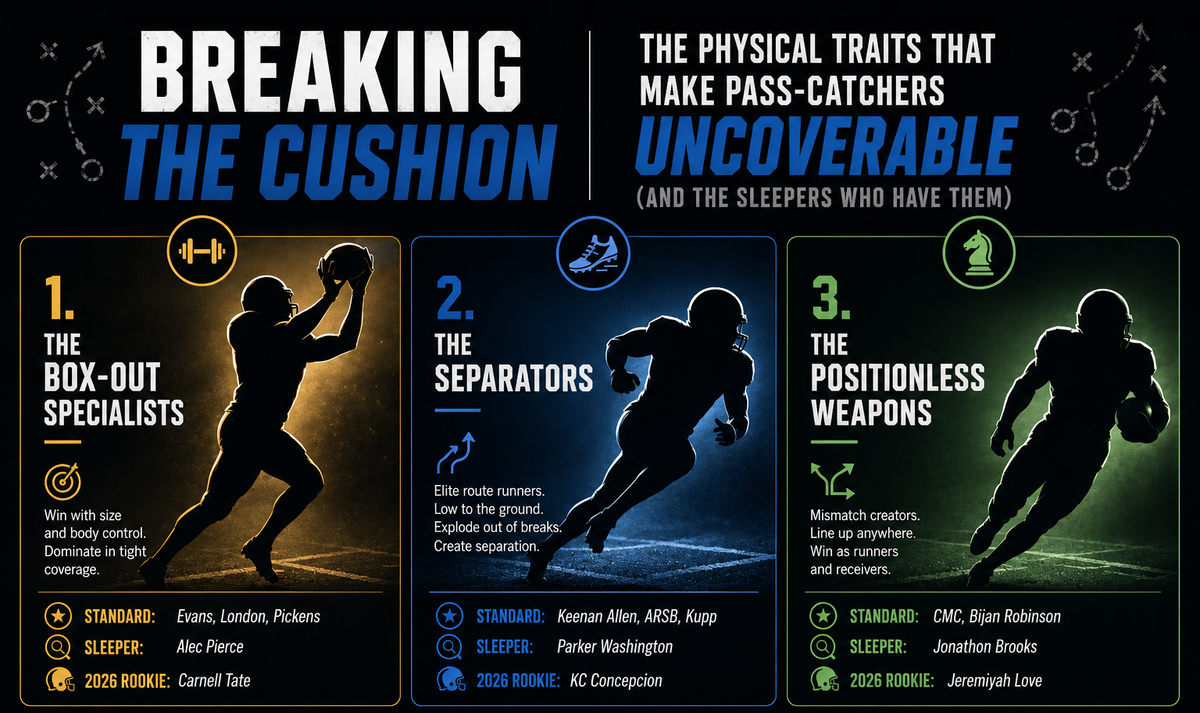
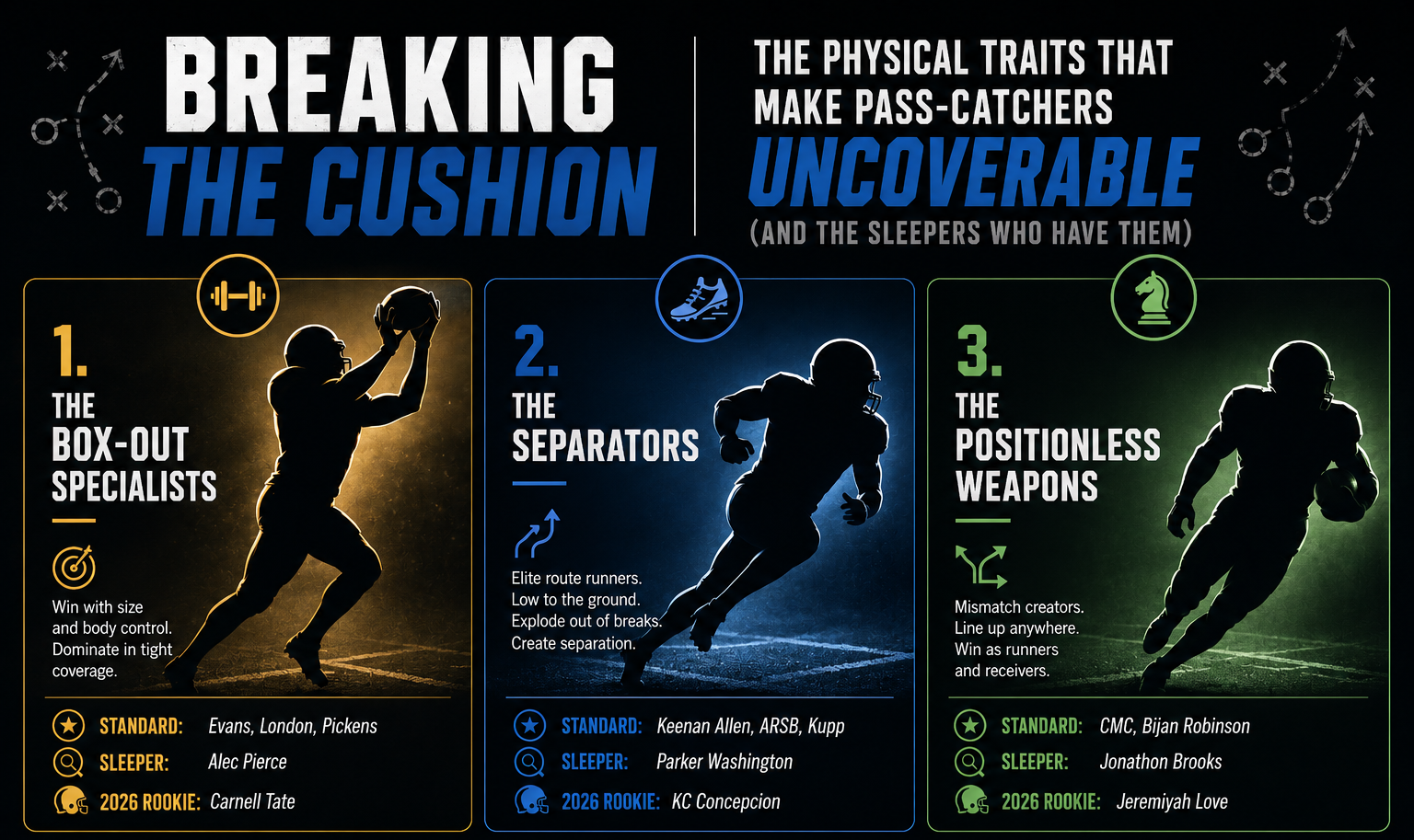
The Box-Out Specialists
The Nightmare
These players don’t need three yards of separation. They use elite size, length, and body control to shield defenders from the football, winning even when the coverage is technically perfect.
Long receivers dramatically reduce a cornerback’s margin for error. Play through the receiver? It’s likely pass interference. Play over the top? The quarterback throws a back-shoulder fade where only the receiver can make the play.
The Standard
Mike Evans, Drake London, George Pickens
Sleeper
Alec Pierce (Indianapolis Colts): Pierce isn’t just tall, he tested in the 96th percentile in catch radius at his combine, backed by 33-inch arms. That’s not a generic “he’s big” profile; it’s a measurable top-of-class catch radius, which is exactly the trait that turns 50/50 balls into 70/30 balls. The swing factor for Pierce has always been target volume in a crowded Colts room, not the traits themselves.
2026 Rookie to Watch
Carnell Tate (Tennessee Titans): Tate went No. 4 overall to Tennessee, and his tape backs up the profile: he’s a proven contested-catch winner with the body control to adjust on back-shoulder throws, despite testing only middle-of-the-pack in a straight-line 40. That gap, elite ball skills paired with modest timed speed, is the exact signature of a box-out receiver rather than a separator. Worth tracking as he settles in as a rook.
The Separators
The Nightmare
Elite route runners win with almost no wasted movement. Their low center of gravity, balance, and footwork allow them to sink their hips and explode out of breaks without sacrificing speed.
Defensive backs are taught to read a receiver’s hips, but these players rarely tip their routes. By the time a defender reacts, the receiver has already created separation.
The Standard
Keenan Allen, Amon-Ra St. Brown, Cooper Kupp
Sleeper
Parker Washington (Jacksonville Jaguars): The numbers back the trait here directly. Washington posted the best contested-catch win rate (65.5%) of any receiver with 20+ targets last season, while also averaging 3.78 yards per route run during his late-season breakout stretch. That combination — winning at the catch point and creating easy separation as a route runner — is rare, and it’s why he heads into 2026 as a real threat to lead a crowded Jaguars receiver room in targets.
2026 Rookie to Watch:
KC Concepcion (Cleveland Browns): Cleveland took Concepcion 24th overall, and his game is built on quickness rather than size: 4.46 speed, explosive short-area burst, and the ability to separate at the top of the route on quick-rhythm concepts. Scouts have already floated Amon-Ra St. Brown as a stylistic comp — that’s the separator archetype in a nutshell. He lands in an offense that badly needs someone who wins early against man coverage.
The Contact-Balance Backs
The Nightmare
These running backs pair legitimate receiving polish with the vision and power to punish defenders after the catch. They don’t just catch passes out of the backfield — they force a math problem: leave a linebacker in coverage and get beaten as a route runner, or match a defensive back and get run over.
The Standard
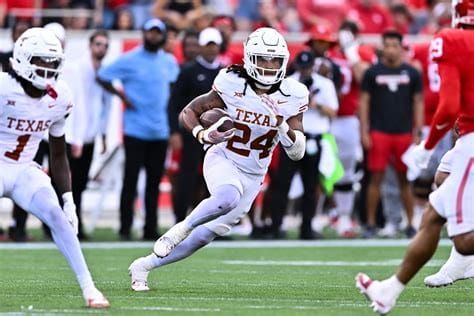
Christian McCaffrey, Bijan Robinson: McCaffrey helped redefine the position because he runs routes like a slot receiver while still thriving between the tackles. That versatility forces defenses to reveal coverage before the snap.
Sleeper
Jonathon Brooks (Carolina Panthers): The trait case is specific here, not generic: Panthers coaches have singled out his hands and ball-tracking through OTAs, and with Rico Dowdle now in Pittsburgh, Brooks has a clean runway to the early-down and third-down receiving role behind Chuba Hubbard. The swing factor is health — this is his third recovery from a right ACL tear — but if the traits show up on tape in camp, he’s a low-cost dynasty stash with a real receiving role attached. The market is super high right now on his potential.
2026 Rookie to Watch
Jeremiyah Love (Arizona Cardinals): Love went No. 3 overall, the highest a running back has been drafted since Saquon Barkley in 2018 — and the traits explain why. He ran a 4.36 at the combine carrying 214 pounds, matching Jahmyr Gibbs’ testing number despite the extra weight, and he’s shown reliable hands and burst out of the backfield at Notre Dame. Arizona’s backfield produced the second-fewest rushing yards in the NFL last season, so the offensive runway is wide open for Love to be a true three-down weapon from Week 1.
The Fantasy Takeaway
The dynasty market often pays for last year’s production. Championship managers pay for the traits that create next year’s production.
Instead of chasing box scores, track the measurables and tape traits that consistently force defensive coordinators into bad decisions — catch radius, contested-catch rate, yards per route run, timed speed relative to size. Those are the players who earn targets, create explosive plays, and become the sleepers everyone else finds a year too late.
Find the traits before everyone else finds the production.
Explore The Lab.